Is your backup platform simply storing copies of data, or can it help your organization restore clean, usable systems when ransomware disrupts operations?
That distinction matters because a study published in the Journal of Cybersecurity found that 53% of surveyed ransomware incidents had a high overall impact severity, underscoring the need for resilient recovery capabilities beyond basic backups (Source).
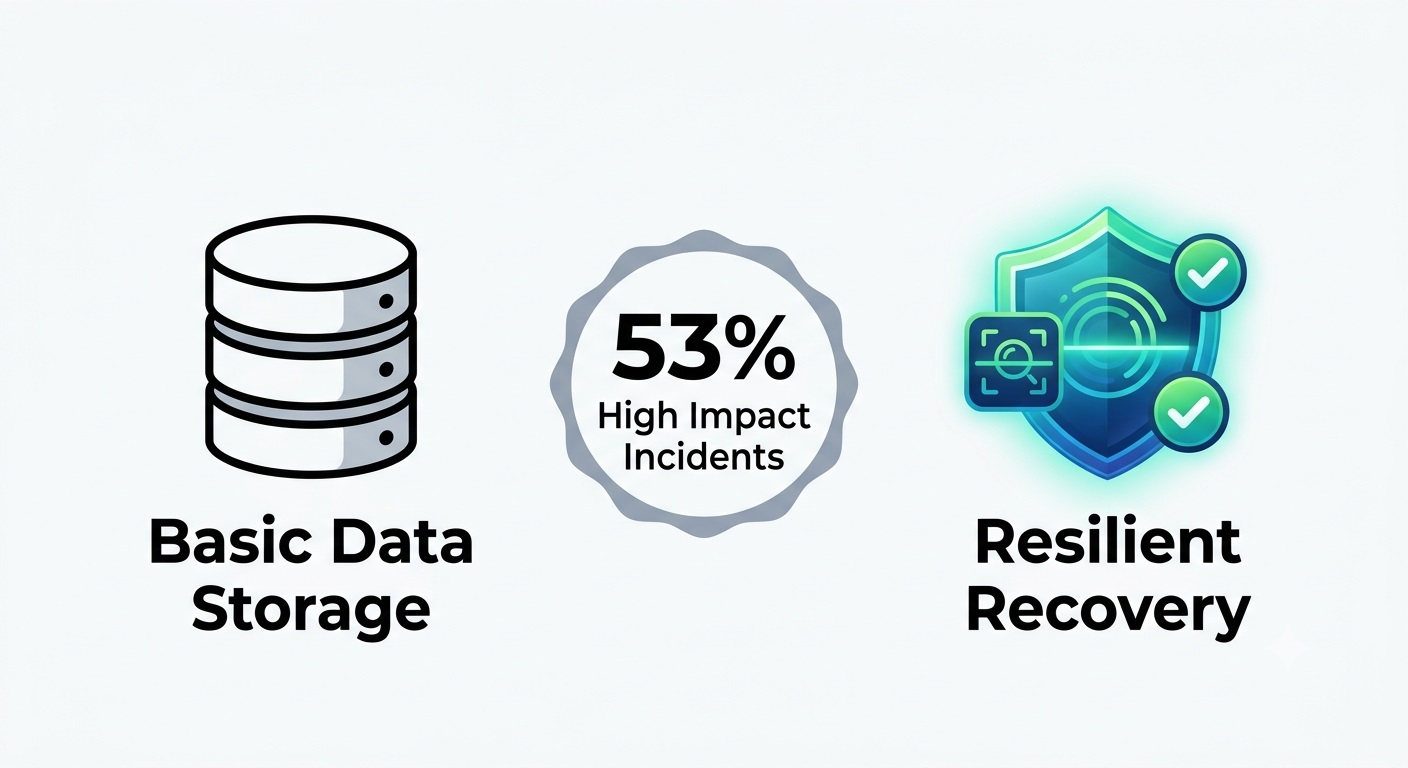
Basic backup storage compared to resilient recovery capabilities required during ransomware incidents.
Rubrik backup is part of Rubrik Security Cloud, an enterprise cyber-resilience platform designed to protect cloud, on-premises, SaaS, database, and other business workloads. Its capabilities include centralized data protection, immutable backups, risk monitoring, and recovery after cyberattacks.
Central Data Storage offers a different approach through UnisonBDR, combining backup technology with managed oversight, clean recovery verification, private infrastructure, and direct restoration support.
This comparison examines Rubrik versus Central Data Storage across backup capabilities, ransomware recovery, deployment, healthcare suitability, support, pricing, and organizational fit.
Rubrik Backup vs Central Data Storage at a Glance
Rubrik and Central Data Storage serve different buyers. Rubrik is a broad enterprise cyber-resilience platform for complex on-premises, cloud, SaaS, database, and identity workloads. Central Data Storage provides managed backup and recovery for healthcare organizations, regulated businesses, and lean IT teams that want direct recovery support.
| Comparison area | Rubrik Backup | Central Data Storage |
| Primary model | Enterprise cyber-resilience platform | Managed backup and recovery service |
| Best fit | Large, complex IT environments | Healthcare, regulated businesses, and lean IT teams |
| Recovery approach | Policy-driven, platform-led recovery | Provider-assisted, verified recovery |
| Deployment | On-premises, cloud, and SaaS protection | Managed private cloud, self-hosted Docker, or licensed deployment |
| Main strength | Broad workload coverage and centralized control | Healthcare focus, direct support, and deployment flexibility |
| Cost model | Enterprise quote-based pricing | Predictable plans with no egress or retrieval fees where applicable |
Choose Rubrik When You Need Enterprise-Wide Cyber Resilience
Rubrik is better suited to organizations that need centralized protection across diverse workloads, automated policies, immutable backups, and recovery orchestration at enterprise scale.
Choose CDS When You Need Managed, Healthcare-Focused Recovery
CDS is a stronger Rubrik alternative for organizations that prioritize clean recovery verification, direct human support, private infrastructure, and flexible deployment. UnisonBDR can be fully managed by CDS, self-hosted in a private environment, or licensed for internal operation.
The choice comes down to the operating model: Rubrik offers broad enterprise cyber resilience, while CDS offers specialized, service-led recovery.
What is Rubrik Backup?
Rubrik backup is part of Rubrik Security Cloud, a cyber-resilience platform for protecting on-premises, cloud, SaaS, database, and identity workloads.
Rubrik Backup and Recovery Capabilities
Rubrik provides:
- Immutable, air-gapped backups
- Policy-based backup, retention, and recovery
- Threat monitoring and backup validation
- Identification of clean recovery points
- Recovery orchestration across applications and sites
- Protection for virtual machines, databases, cloud resources, SaaS data, and identity systems
Who is Rubrik Best Suited For?
Rubrik is primarily suited to organizations with diverse workloads and established IT or security teams. It is especially relevant when a business needs centralized policies, broad enterprise coverage, identity recovery, and coordinated restoration across multiple cloud and data-center environments.
Its value is therefore broader than conventional backup. Buyers evaluating a Rubrik alternative should compare not only storage and backup features, but also workload compatibility, internal management requirements, recovery responsibility, and the level of service needed during an incident.
Why Do Organizations Consider a Rubrik Alternative?
Organizations usually consider a Rubrik alternative because they need a different cost, deployment, or service model, not because Rubrik lacks enterprise backup capabilities. Rubrik supports a wide range of cloud, SaaS, database, and data-center workloads, including healthcare environments.
They Need a Different Service Model
Some organizations prefer a fully managed service, private infrastructure, or software they can operate internally. CDS offers UnisonBDR through three models:
- Fully managed on CDS infrastructure
- Self-hosted through Docker
- Licensed for operation within the customer’s environment
This gives organizations greater control over where the platform runs and who manages recovery.
They Need More Deployment Control
A backup platform may provide the tools to restore data, but an organization must still define who validates recovery points, coordinates restoration, and supports staff during an incident.
CDS positions UnisonBDR as a managed recovery service with human support, backup verification, and assistance when data must be restored.
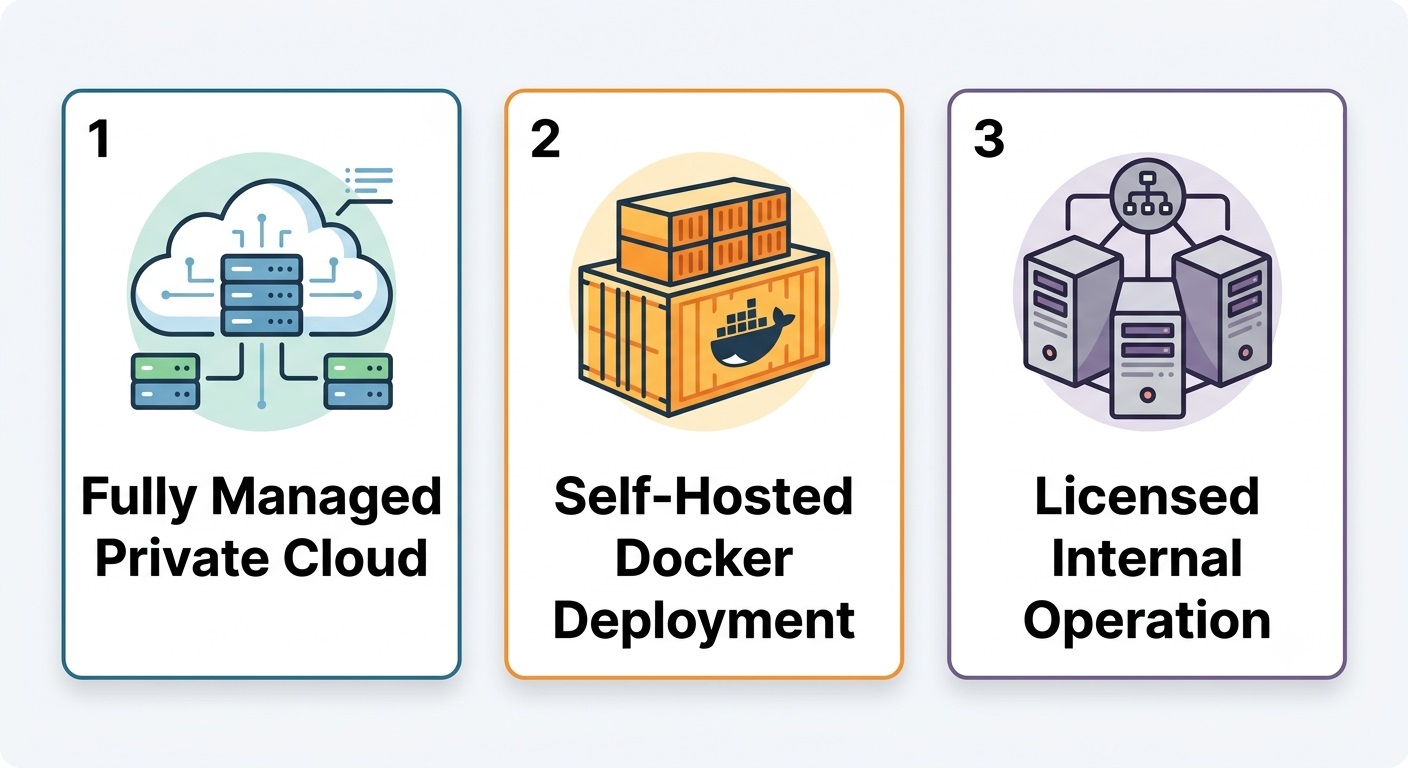
UnisonBDR provides flexible deployment options tailored to organizational control requirements.
They Need More Predictable Recovery Costs
Rubrik uses a sales-led enterprise purchasing process rather than publishing standard pricing on its website. Healthcare practices, regulated businesses, and lean IT teams may instead prefer predictable backup pricing and fewer internal resources required to manage recovery.
Rubrik Backup vs CDS: Key Differences
Rubrik and Central Data Storage both support ransomware-resilient backup and recovery, but they differ in scope, delivery model, infrastructure, and recovery responsibility. The comparison below focuses on how each solution operates, not simply which platform has more features.
| Area | Rubrik Backup | Central Data Storage |
| Primary model | Enterprise cyber-resilience platform | Managed backup and disaster recovery service |
| Best fit | Large organizations with complex cloud, SaaS, database, and data-center workloads | Healthcare organizations, regulated businesses, and lean IT teams |
| Recovery model | Internal teams use platform tools to investigate and orchestrate recovery | CDS assists with restore validation, recovery planning, and restoration |
| Clean recovery | Immutable backups, threat analysis, and clean recovery-point identification | Malware scanning, integrity checks, and provider-led restore verification |
| Deployment | Centralized protection across on-premises, cloud, SaaS, and hybrid environments | Fully managed, self-hosted Docker, or licensed deployment |
| Commercial approach | Enterprise quote based on workloads and requirements | Predictable plans with no egress or retrieval fees where applicable |
Platform Scope and Workload Coverage
Rubrik covers a wider enterprise data estate, including data-center systems, public clouds, SaaS platforms, databases, and identity workloads. CDS has a narrower focus on managed backup, disaster recovery solutions, and verified restoration for organizations that prioritize recovery support over broad platform consolidation.
This difference is especially relevant for healthcare organizations, where backup decisions often involve evaluating recovery processes, system availability, and vendor support alongside technical capabilities. A broader look at the best backup services for healthcare providers can help organizations compare solutions based on their specific operational requirements.
Recovery Ownership and Support
Rubrik supplies the technology to investigate attacks, select recovery points, and orchestrate restoration. The customer’s IT team, Rubrik services, or a service partner must still define who executes each recovery task.
CDS embeds that responsibility into the service model. Its team assists with restore-point validation, recovery sequencing, and restoration rather than leaving the customer to operate the platform alone.
Immutable Backups vs Verified Recovery
Rubrik already provides immutable backups, threat analysis, and clean recovery-point identification. CDS should therefore not be positioned as the only vendor capable of clean recovery.
The distinction is the delivery process: CDS combines technical validation with provider-led malware scanning, integrity checks, and direct restore assistance before data returns to production.
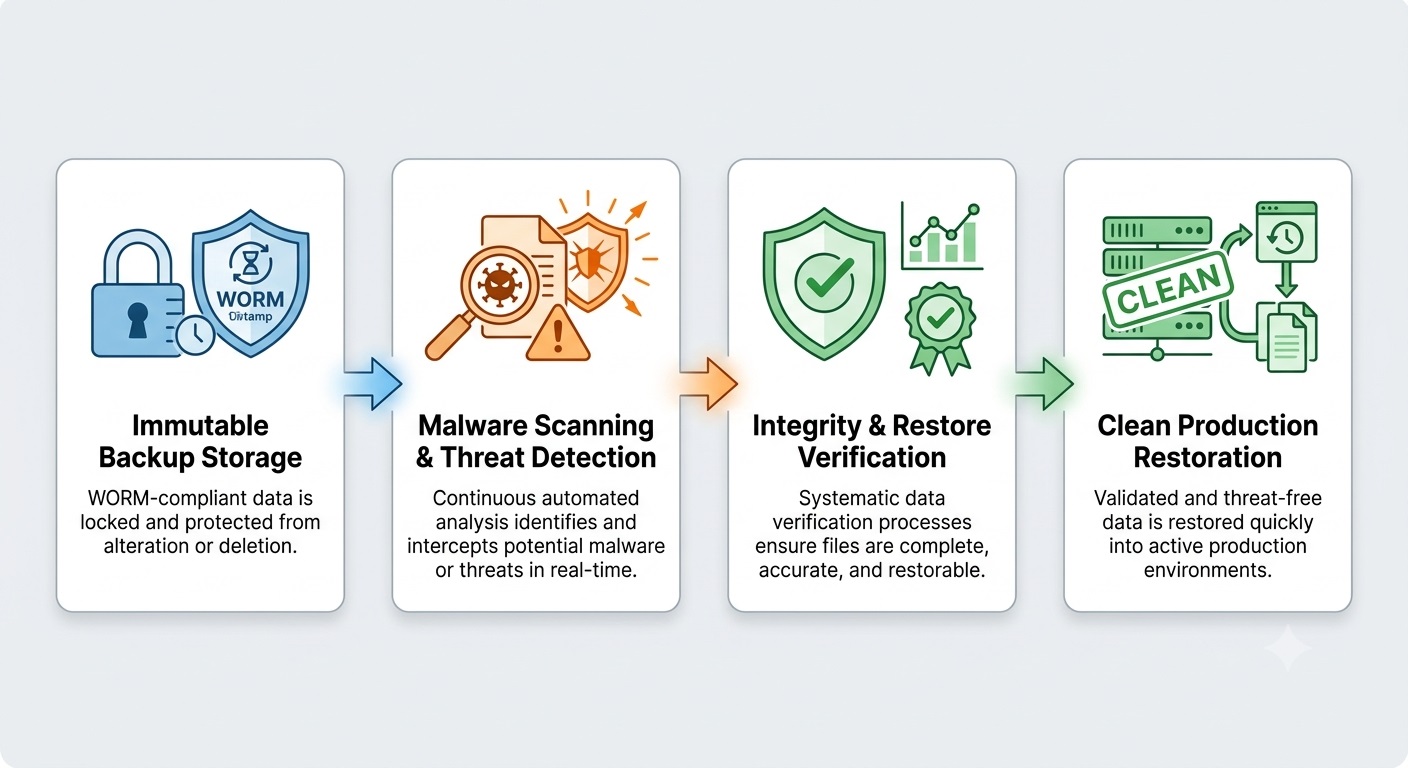
A verified recovery model validates integrity and scans for malware before restoring systems into production.
Deployment and Infrastructure Control
Rubrik centralizes protection across hybrid and multi-cloud environments. CDS gives buyers three operating choices: a fully managed service on CDS infrastructure, a self-hosted Docker deployment, or licensed software operated internally.
Pricing and Total Cost of Ownership
Rubrik follows an enterprise quotation process based on the customer’s environment and requirements. CDS positions applicable UnisonBDR plans around predictable costs and no egress or retrieval charges, reducing uncertainty when large amounts of data must be recovered.
Rubrik or CDS: Which Is Better for Healthcare Organizations?
Healthcare buyers should evaluate how each platform supports clinical systems, patient-data availability, recovery documentation, and vendor responsibilities under a Business Associate Agreement.
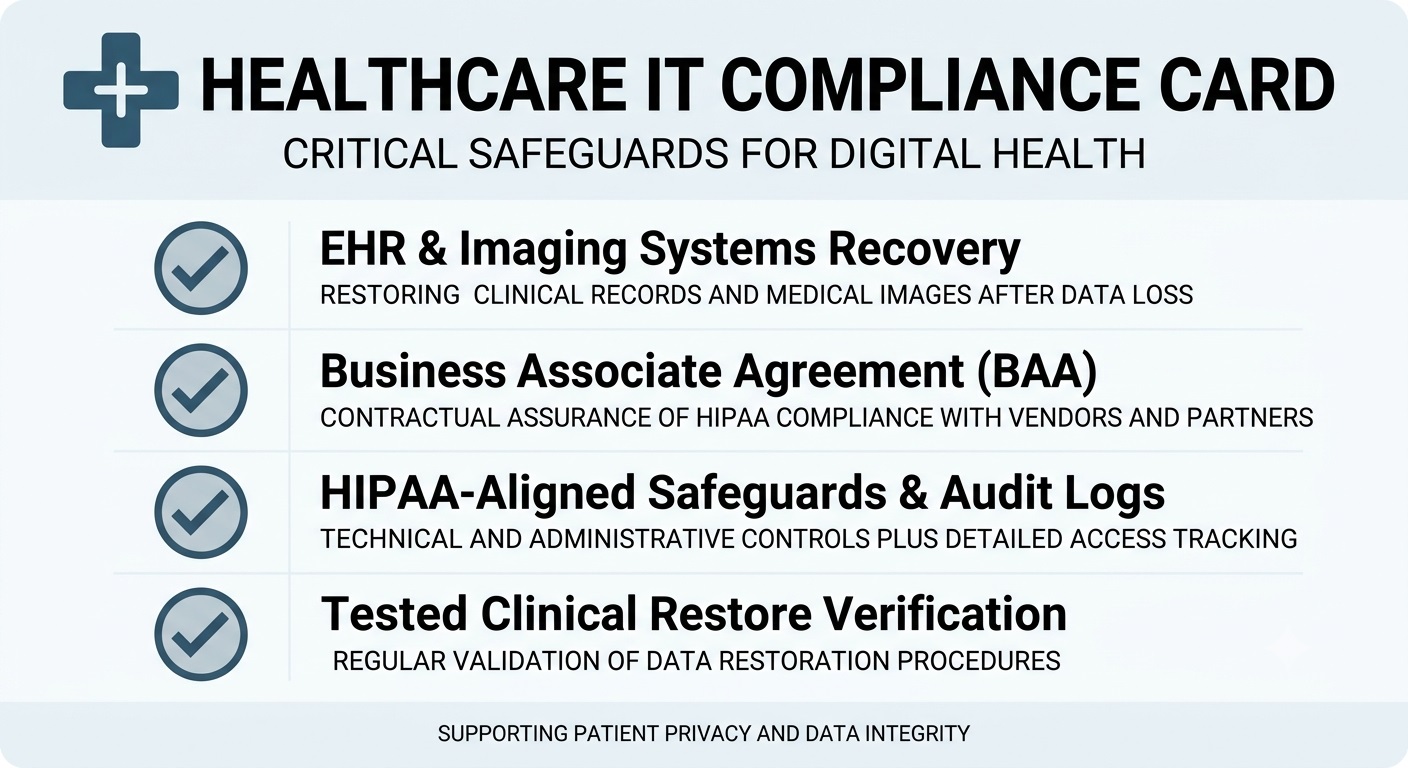
Essential safeguards required for clinical data recovery and HIPAA alignment.
When Rubrik Fits Enterprise Platform Requirements
Rubrik may suit hospitals and large health systems that need centralized protection across EHR platforms, cloud applications, Microsoft 365, identity systems, and other enterprise workloads.
When CDS Fits Medical and Dental Practices
CDS may better suit organizations looking for healthcare data backup and recovery designed around clinical and operational systems.
- Recovery workflows for EHR, imaging, billing, and scheduling data
- Restore testing and verification reports
- A Business Associate Agreement
- HIPAA-aligned safeguards and audit-supporting documentation
These controls support contingency planning, data integrity, and system availability, although no backup provider alone can make an organization HIPAA compliant.
How to Evaluate a Rubrik Alternative Before Switching
A replacement should be evaluated on workload support, recoverability, recovery responsibility, security controls, deployment, and total cost.
Confirm Workload Compatibility
Verify support for all critical systems, including:
- Physical and virtual servers
- Databases and file systems
- Cloud and SaaS applications
- EHR and practice-management platforms
- Imaging, billing, and scheduling data
- Required backup and retention policies
Request Proof of Recoverability
Confirm how the provider verifies that backups can be restored. Look for:
- Restore testing
- Corruption and integrity checks
- Malware scanning
- Application or database validation
- Documented recovery reports
A successful backup notification alone does not prove that the data is usable.
Set RPO, RTO, and Restore Priorities
Set clear:
- RPOs for acceptable data loss
- RTOs for acceptable downtime
- Restore priorities for critical systems
Healthcare organizations should determine whether EHR, imaging, scheduling, communications, or billing must be restored first.
Define Recovery Responsibility
Ask who will:
- Monitor failed backups
- Select the correct restore point
- Coordinate recovery
- Validate restored systems
- Provide support during an incident
This helps distinguish a software-led platform from a managed recovery service.
Review HIPAA-Aligned Safeguards and BAA Terms
Evaluate:
- Encryption at rest and in transit
- Multifactor authentication
- Role-based access
- Immutable or isolated backups
- Audit and restore logs
- Data location
- Retention controls
- Business Associate Agreement terms
These safeguards can support HIPAA obligations, but the organization remains responsible for its overall compliance program. Healthcare organizations should also review the provider’s Business Associate Agreement to understand how PHI responsibilities, safeguards, and breach obligations are defined.
Compare Deployment Models
Determine whether the organization needs a managed service, private cloud, on-premises deployment, or internally operated software.
CDS offers fully managed, self-hosted Docker, and licensed UnisonBDR deployments.
Calculate Total Cost of Ownership
Include:
- Licensing
- Storage and retention
- Infrastructure
- Migration
- Administration
- Restore testing
- Support
- Retrieval or egress fees
- Incident-recovery assistance
The lowest subscription price does not always result in the lowest operating or recovery cost.
Run a Recovery Test Before Migration
Run a pilot that includes an actual restore of a representative server, database, or application. This helps confirm recovery speed, compatibility, reporting quality, and support responsiveness before the existing platform is retired.
Is CDS the Best Rubrik Alternative for Your Organization?
CDS is not a direct replacement for every Rubrik deployment. Rubrik is better suited to large enterprises that need centralized protection across complex cloud, SaaS, database, identity, and data-center environments.
Central Data Storage is a stronger Rubrik alternative for healthcare organizations, regulated businesses, and lean IT teams that value:
- Provider-assisted recovery
- Clean restore verification
- Private infrastructure
- Managed, self-hosted, or licensed deployment
- Predictable costs without applicable egress or retrieval fees
The right choice depends on the organization’s scale, workload complexity, internal recovery expertise, and preferred service model. Rubrik delivers broad enterprise cyber resilience, while CDS combines backup technology with healthcare-focused recovery support.
Not sure which backup model is right for your organization? Request a Data Risk and Recovery Assessment from Central Data Storage to review your environment, recovery priorities, workload requirements, deployment preferences, and HIPAA-aligned safeguards.
FAQs About Rubrik Backup Alternative
What is the Best Rubrik Alternative for Healthcare?
Central Data Storage may be a stronger fit for healthcare organizations that need managed recovery, clean restore verification, private infrastructure, and direct support rather than a broad enterprise cyber-resilience platform.
Can Central Data Storage Replace Rubrik?
Not in every environment. Rubrik better serves complex enterprise workloads, while CDS is designed for healthcare, regulated businesses, and teams seeking provider-assisted backup and recovery.
Does Rubrik Provide Immutable Backups?
Yes. Rubrik provides immutable backup protection, threat monitoring, and clean recovery-point identification across supported enterprise, cloud, SaaS, and data-center workloads.
What is the Difference Between Immutable Backup and Verified Recovery?
Immutable backup prevents stored data from being altered or deleted. Verified recovery checks that the selected restore point is usable, uncorrupted, and free from detected threats before restoration.
Can UnisonBDR Be Self-Hosted?
Yes. UnisonBDR is available as a fully managed service, a self-hosted Docker deployment, or licensed software operated within the customer’s private infrastructure.
How Do Rubrik and CDS Pricing Models Compare?
Compare licensing, storage, infrastructure, administration, restore testing, support, retrieval fees, and recovery assistance. Total recovery cost is more meaningful than subscription price alone.
How Does CDS Support HIPAA Requirements?
No backup provider can independently make an organization HIPAA compliant. CDS provides HIPAA-aligned safeguards, recovery documentation, audit logs, and Business Associate Agreements that support the organization’s compliance responsibilities.

![10 Best Backup Services for Healthcare Providers [2026 Comparison]](https://centraldatastorage.com/wp-content/uploads/2026/08/Backup-Services-for-Healthcare-Providers-400x250.png)