If ransomware locked your systems today, how much would every hour of recovery cost your organization?
Ransomware recovery is not just an IT expense. It can interrupt revenue, delay operations, require forensic investigation and system rebuilding, and keep critical applications unavailable for days or weeks.
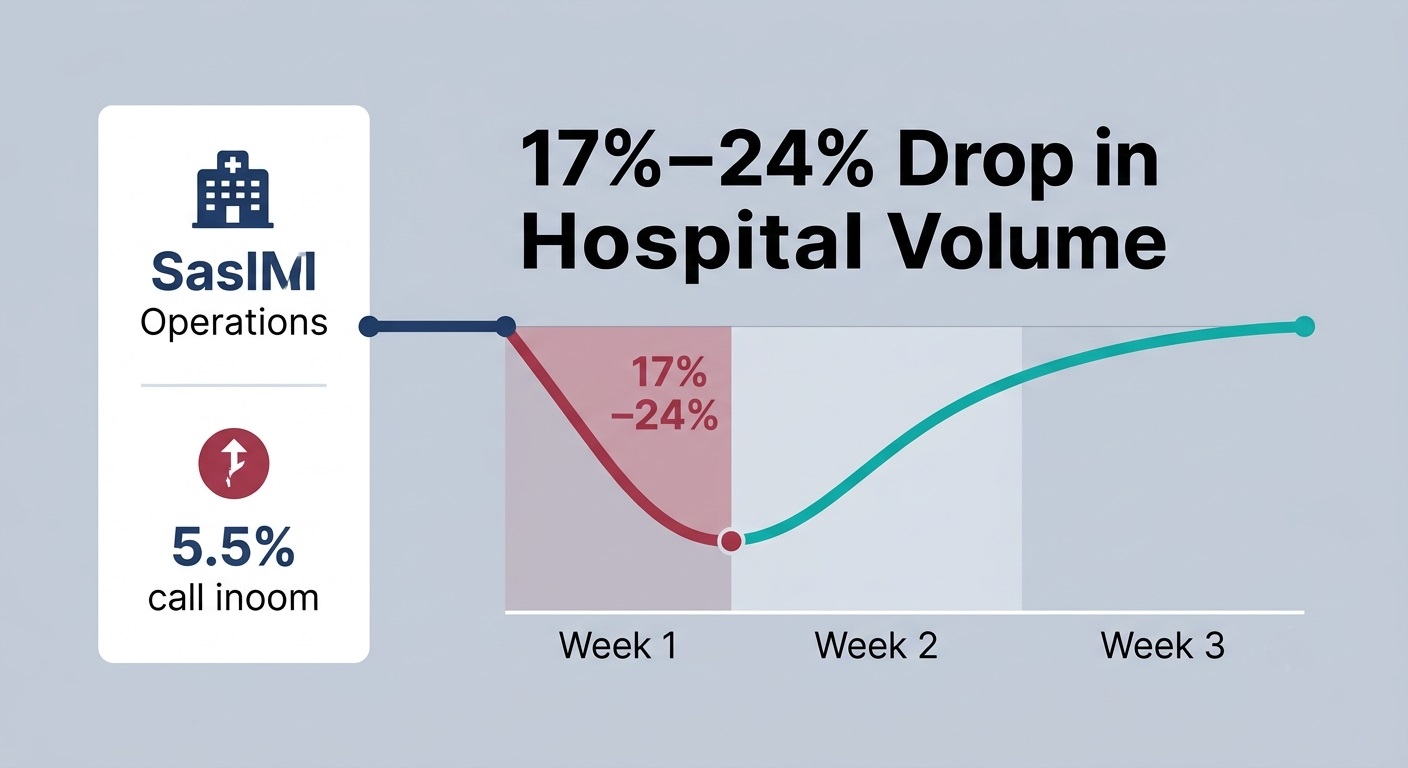
A 2026 study in the American Economic Journal: Economic Policy found that ransomware attacks reduced hospital volume by 17%–24% during the initial attack week, with hospital activity recovering within three weeks (Source).
For healthcare organizations, that disruption can affect access to EHRs, imaging systems, scheduling, billing, and other essential workflows. The eventual ransomware recovery cost depends on factors such as the scope of the attack, length of downtime, system-restoration requirements, outside incident-response support, and, critically, whether clean, recoverable backups are available.
Before comparing ransomware cost figures, however, one distinction matters: ransom payment, recovery cost, and total incident cost are not the same thing.
Quick Answer: How Much Does it Cost to Recover From Ransomware?
There is no fixed ransomware recovery cost. The amount depends on attack scope, downtime, infrastructure complexity, backup condition and specialist support. Expenses may include system restoration, incident response, forensics, business disruption, legal or compliance work and other costs required to return operations to normal.
What Do Current Ransomware Recovery Cost Benchmarks Show?
Ransomware recovery costs vary considerably between incidents, so industry figures are best used as benchmarks rather than predictions.
Sophos’s 2026 ransomware research reports an average recovery cost of $1.7 million, excluding the ransom payment itself. The same study reports a $769,000 median ransom payment, reinforcing why ransom and recovery costs should be evaluated separately. [SOPHOS]
Healthcare-specific data shows a similar financial burden. Sophos reported that the average healthcare ransomware recovery cost was $1.02 million in 2025, excluding ransom payments, down from $2.57 million the previous year. [SOPHOS]
These averages should not be treated as what every organization will pay. A single contained incident can look very different from an attack that affects multiple servers, applications, identities and backups.
What is Included in Ransomware Recovery Costs?
Ransomware recovery costs include the expenses needed to restore systems, data, and normal operations after an attack. It is separate from the ransom itself and can include technical recovery, incident response, downtime, and legal or compliance work.
Technical Recovery and System Restoration Costs
Technical recovery may involve:
- Rebuilding compromised servers and endpoints
- Restoring databases, applications, and file systems
- Reconfiguring networks and access
- Replacing hardware or infrastructure components when they are damaged, unavailable, unsupported, or cannot be trusted and rebuilt efficiently
- Recovering data from backups
- Validating systems before returning them to production
Costs typically rise when multiple systems are affected or when a usable restore point cannot be identified quickly.
Incident Response and Forensic Investigation Costs
Before systems can be restored safely, specialists may need to determine:
- How the attacker gained access
- Which systems were compromised
- Whether malware remains active
- Whether data was exfiltrated
- Which accounts or credentials were affected
This helps define the scope of recovery and reduces the risk of restoring systems into an environment that is still compromised.
Downtime and Business Disruption Costs
Recovery costs also grow while systems remain unavailable. Common impacts include:
- Lost staff productivity
- Interrupted services
- Delayed billing
- Overtime during recovery
- Temporary manual workflows
- Lost or delayed revenue
For healthcare organizations, downtime can also affect access to EHRs, imaging, scheduling, billing, and practice-management systems.
Legal and Compliance Costs After Ransomware
Depending on the incident, additional costs may include:
- Legal counsel
- Breach assessment
- Regulatory reporting
- Notification
- Compliance documentation
- Third-party specialists
These costs vary depending on what data was affected and which regulatory requirements apply. Some costs can continue after technical restoration is complete.
These may include breach notifications, legal review, regulatory documentation, insurance claims, and follow-up reporting. In other words, bringing systems back online does not always mean the financial impact of the incident has ended.
Ransom Payment vs. Recovery Cost vs. Total Ransomware Cost
| Cost category | What it generally means |
| Ransom payment | Money paid to the attacker |
| Recovery cost | Expenses required to restore systems, data, and operations |
| Total incident cost | Recovery costs plus downtime, legal/compliance expenses, business disruption, ransom payment if made, and other losses |
These figures should not be treated as interchangeable. A report about the average ransom payment is measuring something different from a report about recovery cost or the total financial impact of a ransomware incident.
What Factors Increase Ransomware Recovery Costs?
Ransomware recovery costs vary because the difficulty of restoring operations differs from one incident to another. The biggest cost drivers are usually attack scope, recovery duration, backup condition, infrastructure complexity, and preparedness before the incident.
Size and Scope of the Ransomware Attack
The wider an attack spreads, the more complex recovery becomes.
Cost can increase when ransomware affects:
- Multiple servers or departments
- Shared databases
- Domain or identity infrastructure
- Both cloud and on-premises environments
- Business-critical applications
- Large numbers of endpoints
A contained incident may require restoration of only a few systems, while a network-wide compromise can require coordinated rebuilding across multiple platforms.
How Recovery Time Affects Cost
Time is a major cost multiplier.
A recovery that takes a few hours creates a very different financial impact from one that takes several days or weeks. As recovery extends, the organization continues absorbing operational losses while technical and external support costs accumulate.
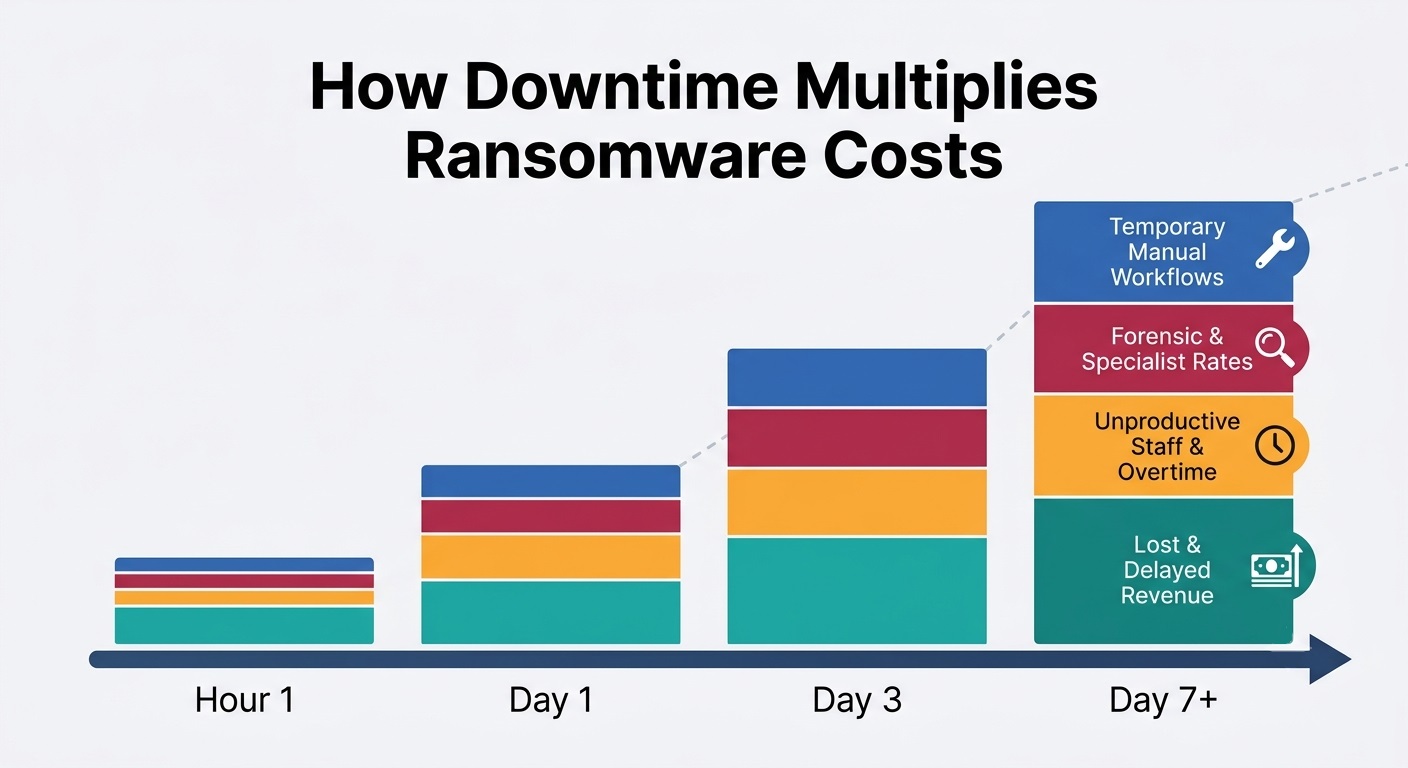
The important relationship is:
Longer recovery → greater business disruption → higher overall cost.
How Backup Condition Affects Recovery Cost
Backup quality can significantly affect recovery difficulty.
Costs tend to be lower when usable recovery copies are:
- Recent
- Accessible
- Isolated from the compromised environment
- Complete
- Verified as recoverable
Costs can rise when backups are:
- Encrypted or deleted
- Corrupted
- Incomplete
- Too old
- Inaccessible
- Of uncertain integrity
The issue is therefore not simply whether backups exist, but how much confidence the recovery team has in the available restore points. Understanding the difference betweenclean and infected restore points is particularly important after ransomware.
How Infrastructure Complexity Affects Recovery
Complex environments generally require more coordination during recovery.
Factors may include:
- Number of applications
- Dependencies between systems
- Hybrid cloud and on-premises infrastructure
- Legacy systems
- Specialized healthcare software
- Third-party integrations
The more dependencies a critical application has, the harder it may be to restore that application in isolation.
How Recovery Readiness Affects Cost
Organizations that already know what to restore first can reduce decision-making delays during an incident.
Recovery readiness includes:
- Defined recovery priorities
- Documented recovery procedures
- Tested restore processes
- Assigned responsibilities
- Known escalation paths
- Current recovery documentation
Preparedness does not prevent recovery costs, but it can reduce avoidable delays and uncertainty.
How Industry Requirements Affect Recovery Costs
Some sectors require additional validation before restored systems can safely return to service.
For healthcare organizations, recovery should protect the confidentiality, integrity, and availability of electronic protected health information (ePHI). A backup and recovery strategy designed to support HIPAA-aligned backup requirements can help organizations maintain recoverability and restore access to ePHI after an incident.
Need to Know Whether Your Backups Are Actually Recoverable?
CDS helps healthcare organizations evaluate backup integrity, restore readiness and recovery risk before an outage becomes an extended operational problem.
Why Ransomware Recovery Costs Can Be Higher in Healthcare
Healthcare environments can be more expensive to recover because restoration is rarely as simple as bringing one server back online. Clinical, administrative, and diagnostic systems are often interconnected, and recovery must restore those dependencies without compromising patient data or creating new operational risks.
Interconnected Clinical Systems Increase Recovery Complexity
A healthcare application may depend on several underlying systems before it can function normally.
For example, restoring an EHR may also require:
- Identity and authentication services
- Databases
- Network connectivity
- Interfaces with labs or imaging systems
- Storage systems
- Third-party integrations
If one dependency remains unavailable or untrusted, the application may still be unusable even after its primary server has been restored.
This means recovery teams often have to rebuild an operational chain, not just individual systems.
Healthcare Systems Must Be Restored in the Right Order
Healthcare organizations cannot always restore systems in whatever order is technically easiest. The priority is usually to return the systems most critical to care and daily operations first.
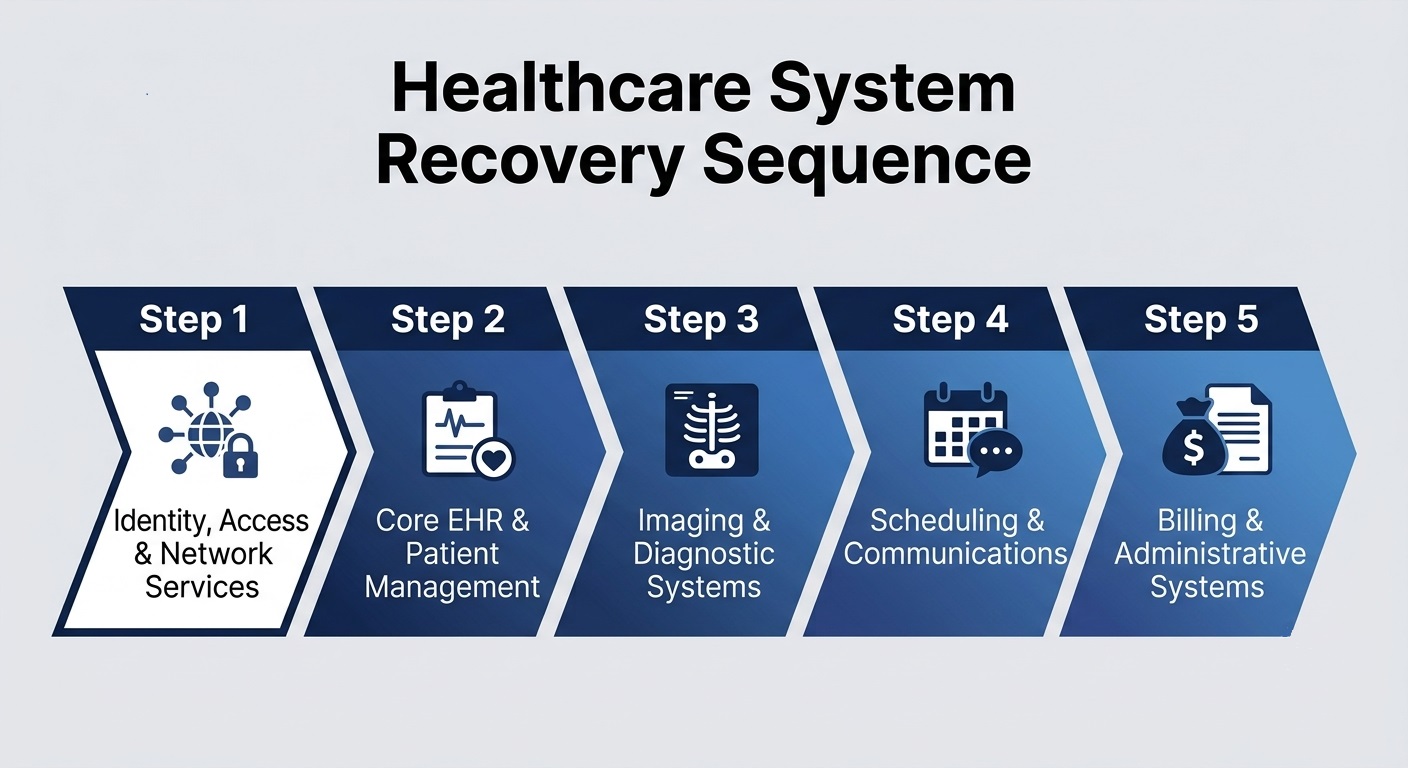
An illustrative recovery sequence may begin with the core infrastructure and dependencies required to bring critical patient-care systems back online:
- Identity, access, and network services
- Core EHR or patient-management systems
- Imaging and diagnostic applications
- Scheduling and communications
- Billing and secondary systems
The appropriate sequence should be based on a predefined list of critical services and their dependencies. CISA recommends prioritizing restoration according to systems that support health and safety, revenue generation, and other essential services.
ePHI Must Be Protected During Recovery
Healthcare recovery should protect the confidentiality, integrity, and availability of ePHI while systems are being restored.
That may require additional attention to:
- Data integrity
- Controlled access
- Audit logging
- Restore documentation
- User permissions
- Verification that restored information is complete and usable
Recovery teams should document restore activities, validate that restored systems and data are usable, and retain appropriate records of recovery actions. Periodic restoration testing can help verify backup integrity and build confidence in the organization’s ability to recover data after an incident.
Specialized Healthcare Software Can Increase Recovery Complexity
Medical and dental organizations often rely on software that is highly specialized or tightly tied to specific databases, devices, or vendor configurations.
Examples can include:
- Practice-management platforms
- Dental imaging systems
- Radiology applications
- Lab interfaces
- Patient-management software
These systems may require vendor coordination or application-specific restoration steps, which can make recovery more involved than restoring standard business files.
For healthcare organizations, the financial impact of ransomware therefore depends not only on how much data was affected, but on how many interconnected clinical systems must be restored, validated, and returned to service in the correct order.
How to Calculate Your Estimated Ransomware Recovery Cost
Industry averages provide context, but they cannot tell you what an incident would cost your organization.
A more useful model is:
Estimated ransomware recovery cost = direct recovery expenses + downtime and business-disruption costs + legal/compliance costs + other incident-specific expenses
Ransomware Recovery Cost Inputs to Gather
Before estimating exposure, collect:
- Revenue per hour or day
- Staff cost during downtime
- Expected recovery duration
- Incident-response and forensic costs
- Application or system rebuilding costs
- Replacement equipment costs
- Legal and compliance expenses
- Third-party vendor costs
- Insurance deductible
- Ransom payment, if applicable
Organization-specific figures produce a much more useful estimate than applying an industry average to every incident.
1. Calculate Your Daily Downtime Cost
Start by calculating what one hour or one day of system unavailability costs your organization.
A practical formula is:
Daily downtime cost = lost or delayed revenue + unproductive staff costs + overtime and temporary operating expenses
For example, if a healthcare practice estimates:
- $15,000 in delayed or lost revenue
- $6,000 in staff costs during disruption
- $4,000 in temporary operating or recovery-related expenses
Its estimated downtime exposure would be $25,000 per day.
If recovery takes four days, that portion of the incident could reach approximately $100,000.
This example is illustrative only; actual figures will vary significantly by organization.
2. Add Your Direct Recovery Expenses
Next, add the estimated cost of services and resources required specifically because of the incident, such as:
- External incident-response or recovery specialists
- Forensic services
- System or application rebuilding
- Replacement equipment
- Legal or compliance assistance
- Additional vendor support
Where possible, use existing vendor contracts, hourly rates, insurance deductibles, or past incident costs rather than relying on industry averages.
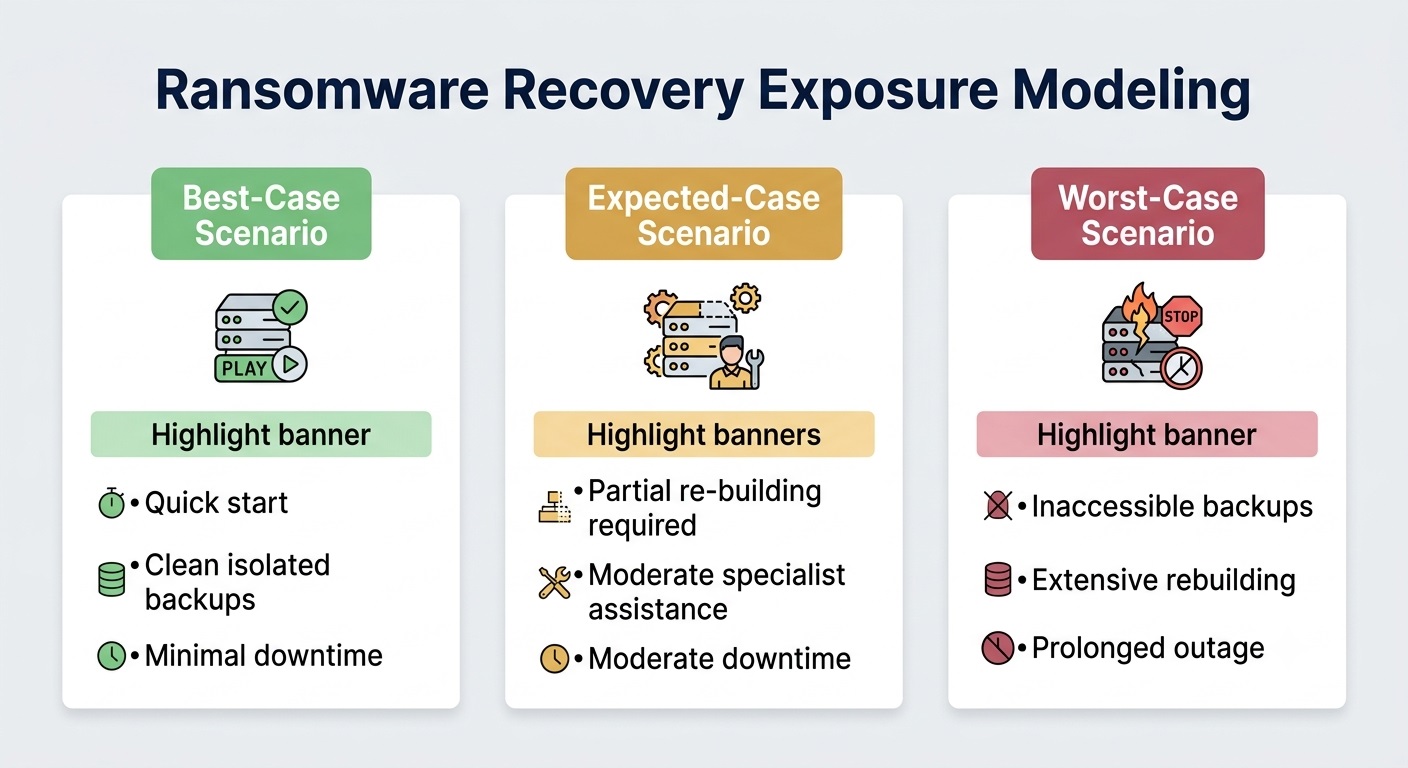
3. Estimate Best-, Expected-, and Worst-Case Recovery Costs
A single estimate can create false confidence. Build three scenarios instead:
| Scenario | Assumption |
| Best case | Recovery begins quickly, and critical systems return within the planned timeframe |
| Expected case | Some systems require additional restoration or specialist support |
| Worst case | Recovery takes substantially longer than planned and requires extensive external assistance |
This gives leadership a realistic cost range rather than one misleading number.
Calculate Your Cost per Day of Recovery
For most organizations, one of the most actionable figures is:
“What does each additional day of recovery cost us?”
Once that number is known, it becomes easier to evaluate the financial value of faster restoration, tested recovery procedures, and reliable recovery infrastructure.
How to Reduce Avoidable Ransomware Recovery Costs
Recovery readiness does not eliminate the financial impact of ransomware, but it can reduce avoidable delays, uncertainty, and unnecessary recovery work.
The goal is to make restoration decisions before an incident happens, rather than during the outage.
When an organization is already dealing with an active ransomware incident, structured ransomware recovery services can help coordinate system restoration, recovery priorities, and the return of critical operations.
Keep Recovery Copies Isolated From Production
Recovery copies should be separated from the production environment so that an attacker cannot easily encrypt or delete them along with live systems.
Depending on the environment, this may involve:
- Offsite storage
- Immutable backup copies
- Restricted administrative access
- Segmentation from production systems
The key objective is to preserve at least one recovery path that remains available after the attack.
Test Backup Restores Before an Incident
A completed backup job generally confirms that data was copied, but it does not prove that the data can be restored successfully.
Regular restore testing helps confirm:
- Whether backup data is readable
- Whether applications can be brought back online
- Whether dependencies are documented
- Whether recovery procedures work as expected
This makes recovery planning more predictable and reduces the risk of discovering backup problems during an actual incident.
Verify Backup Integrity and Restore Points
Backups should be checked for issues that could make them unsafe or unusable during recovery.
Important checks can include:
- Data corruption
- Missing files
- Incomplete backup sets
- Restore-point integrity
- Whether data and applications can be restored successfully
Backup verification and recovery processes help confirm that recovery data is available and usable, but they do not by themselves prove that a restore point is free of malware. Before returning restored systems to production, organizations may also need security review, malware scanning, or forensic validation. CISA recommends regularly testing the availability and integrity of backups in a disaster-recovery scenario.
Define Recovery Priorities and RTOs
Organizations should know which systems need to return first.
This can include defining:
- Recovery time objectives
- Critical system dependencies
- Restore order
- Responsible personnel
- Escalation contacts
A documented priority list helps recovery teams avoid losing time deciding what to restore first while operations are already disrupted.
Keep Your Ransomware Recovery Plan Current
Recovery procedures should reflect the systems, vendors, and infrastructure that actually exist today.
A useful recovery plan should identify:
- Who leads the recovery process
- Which vendors need to be contacted
- Where recovery documentation is stored
- How alternate communications will work
- How restored systems will be validated before normal use resumes
The practical objective is simple: reduce the number of decisions that have to be made during the incident itself.
Conclusion: Recovery Readiness Can Change the Cost of Ransomware
There is no single price for ransomware recovery. The final cost depends on how widely the attack spreads, how long critical systems remain unavailable, and how much work is required to restore trusted data and applications.
For healthcare organizations, the financial impact can increase quickly when recovery affects EHRs, imaging, scheduling, billing, or other systems that support daily operations. The most important question is not simply whether backups exist, but whether they are accessible, intact, proven to restore, and suitable for validation before being returned to production.
Organizations that test restores, maintain isolated recovery copies, verify backup integrity, and define recovery priorities in advance are better positioned to reduce avoidable downtime and recovery uncertainty.
Not sure whether your backups are accessible, recoverable, and ready for security validation after a ransomware attack?
Request a Data Risk & Recovery Assessment to evaluate backup integrity, restore readiness, and recovery risk before an incident turns into prolonged downtime.
Ransomware Recovery Cost FAQs
Does cyber insurance cover ransomware recovery costs?
Cyber insurance may cover incident response, forensics, restoration, legal costs, and business interruption. Coverage depends on policy limits, deductibles, exclusions, security requirements, and whether the incident meets the policy terms.
Does data exfiltration increase ransomware recovery costs?
Data exfiltration can increase legal, forensic, notification, and regulatory costs. If attackers copy sensitive data before encryption, recovery may extend beyond system restoration into breach response and documentation.
Are cloud systems cheaper to recover from ransomware than on-premises systems?
Cloud infrastructure does not automatically mean lower recovery cost. Expenses depend on backup isolation, system dependencies, access controls, data volume, restore options, provider support, and how widely the attack spread.
What records should organizations keep to document ransomware recovery costs?
Organizations should document invoices, staff hours, downtime, vendor fees, forensic costs, replacement expenses, legal work, and insurance claims. Accurate records support cost analysis, insurance review, and post-incident reporting.
Do smaller healthcare practices face lower ransomware recovery costs?
Smaller practices may face lower absolute costs but greater relative impact. Limited IT staff, fewer recovery resources, and dependence on a small number of critical systems can make downtime disproportionately expensive.
References
- Neprash, H., McGlave, C., & Nikpay, S. (2026): American Economic Association
- HHS Office for Civil Rights. Fact Sheet: Ransomware and HIPAA: HHS guidance
- CISA.#StopRansomware Guide: CISA guide
- FBI.Ransomware: FBI guidance