What is the best Acronis alternative for healthcare backup?
The best Acronis alternative for healthcare backup is a solution that helps healthcare organizations protect PHI, verify restore points, recover clean data after ransomware, and maintain access to EHR, billing, scheduling, imaging, and practice data during disruption.
Acronis is a broad cyber protection platform. CDS may be a better fit for healthcare teams that need a focused recovery partner for HIPAA-aligned backup, verified clean restores, ransomware recovery support, and patient data continuity.
The key question is simple:
Can your organization restore clean, usable patient data when systems are down, encrypted, corrupted, or inaccessible?
If the answer is uncertain, backup storage alone is not enough. Healthcare teams need recovery confidence.
Why Healthcare Organizations Look for an Acronis Alternative
Healthcare teams usually search for an Acronis alternative when they need more than a broad backup and cyber protection suite. In healthcare, the real requirement is not only copying data. It is restoring the right data quickly, cleanly, and with documentation when patient operations are affected.
Acronis Cyber Protect combines backup, disaster recovery, endpoint protection, anti-malware features, and centralized management. That all-in-one model can work well for organizations that want platform breadth and have a capable IT team to manage the environment.
But some healthcare organizations need a narrower outcome: reliable recovery of EHR, PHI, scheduling, billing, claims, imaging, and practice data.
| Healthcare Need | Why It Matters |
| EHR availability | Clinical teams need patient records to continue care |
| PHI protection | Backup and recovery workflows must protect sensitive patient data |
| Ransomware recovery | Restore points must be clean, usable, and validated |
| Recovery documentation | Healthcare teams need evidence of backup and restore readiness |
| Practical support | Downtime requires fast, informed recovery decisions |
This is where healthcare data protection becomes more specific than general backup. The goal is not just to preserve files. The goal is to keep patient care, claims, scheduling, imaging, billing, and practice operations recoverable.
As healthcare teams compare backup approaches, they should also consider how different providers handle recovery readiness, operational continuity, and healthcare-specific requirements. Reviewing the best backup services for healthcare providers can help organizations evaluate solutions beyond individual platform features.
Acronis may be a good fit when a healthcare organization wants a broad cyber protection platform. A focused alternative becomes more relevant when the priority is verified recovery instead of feature breadth.
What Acronis Cyber Protect Offers Healthcare Teams
A fair comparison should recognize what Acronis is designed to do well. Acronis Cyber Protect is built for organizations that want backup, cyber protection, and management features in one platform.
Acronis may fit healthcare organizations that need:
- backup and disaster recovery
- endpoint protection
- anti-malware protection
- centralized policy management
- broad workload coverage
- cyber protection and recovery features
This can reduce tool sprawl for IT teams that have the resources to configure policies, monitor alerts, test restores, manage endpoint protection, and maintain recovery documentation.
Acronis also has healthcare and HIPAA-focused positioning, so it belongs in the healthcare backup conversation. The decision is not whether Acronis has relevant features. The decision is whether a healthcare organization needs a broad platform or a recovery-focused provider.
Where Acronis May Fall Short for Healthcare Recovery
Acronis may not be the best fit when a healthcare team mainly needs recovery assurance, clean restore validation, and practical support during downtime.
A broad platform can create gaps when features exist but recovery ownership is unclear. A completed backup does not automatically prove that data can be restored, that the restore point is clean, or that EHR and PHI can return to service quickly.
Healthcare teams should be cautious if they cannot answer these questions:
- Are restore points tested?
- Can we identify a clean restore point after ransomware?
- Can EHR, PHI, billing, scheduling, and imaging data be restored in priority order?
- Do we have documentation showing recovery readiness?
- Who supports us during an actual recovery event?
This is why backup verification and recovery matters. Backup completion confirms that data was copied. Verified recovery confirms that the data can be restored and used.
Acronis vs CDS: Healthcare Backup and Recovery Comparison
Acronis and CDS solve related problems, but they are built around different priorities. Acronis is a broad cyber protection platform. CDS is positioned for healthcare organizations that need focused backup, recovery support, and verified restore confidence.
| Evaluation Area | Acronis Cyber Protect | CDS / UnisonBDR |
| Primary role | Broad backup and cyber protection platform | Healthcare-focused backup and recovery partner |
| Best fit | Organizations wanting backup, endpoint protection, and cyber protection in one system | Healthcare teams prioritizing verified recovery and continuity |
| Healthcare relevance | Healthcare and HIPAA-focused positioning available | Built around healthcare data protection and recovery support |
| Recovery focus | Backup, disaster recovery, and cyber protection features | Verified restores, clean recovery, and backup integrity |
| Ransomware readiness | Cyber protection and malware-free recovery features | Clean restore validation and ransomware recovery support |
| HIPAA support | Compliance-focused capabilities available | HIPAA-aligned recovery workflows, BAA support, and documentation |
| Restore confidence | Depends on setup, testing, and management | Central part of the recovery approach |
Acronis may be the better choice when platform consolidation matters most. CDS may be the better Acronis alternative when the healthcare organization needs clean access to patient data after ransomware, outage, deletion, or corruption.
For organizations comparing recovery options, CDS’s backup and disaster recovery software can support healthcare continuity when backup reliability and restore validation are central requirements.
How to Evaluate a HIPAA-Aligned Acronis Alternative
A HIPAA-aligned Acronis alternative should support healthcare backup and recovery without relying on vague compliance claims. The provider should help protect PHI, control access, document activity, and prove that data can be restored.
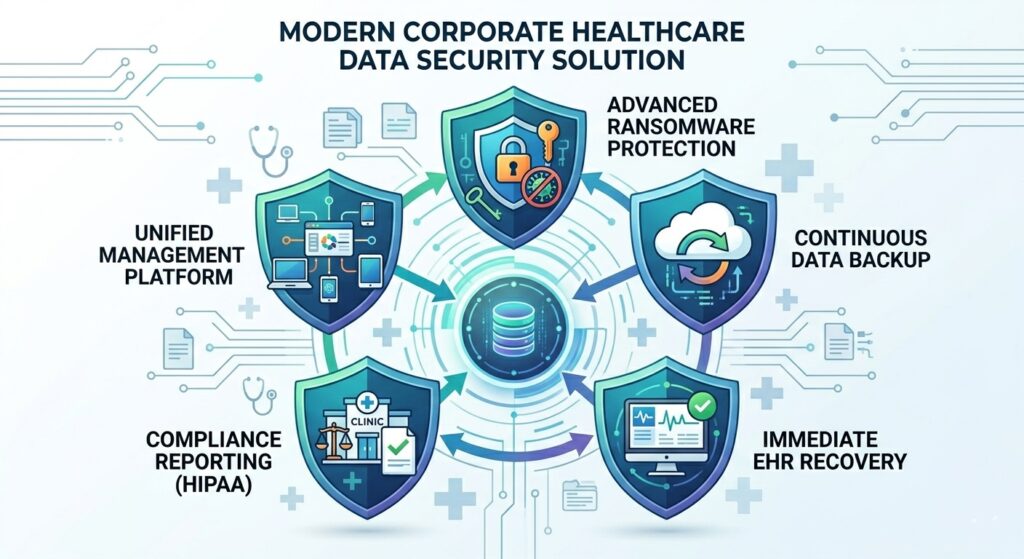
Five essential data protection criteria healthcare teams must evaluate to verify true HIPAA contingency alignment.
Healthcare buyers should evaluate five areas:
| Requirement | What to Confirm |
| BAA support | The provider can define responsibilities when PHI is involved |
| Encryption | Backup data is protected at rest and in transit |
| Access controls | Only authorized users can manage or restore protected data |
| Audit visibility | Backup, access, and restore activity can be reviewed |
| Restore evidence | Recovery points are tested and documented |
These controls do not make a healthcare organization compliant by themselves. They help support HIPAA responsibilities by making backup and recovery more controlled, traceable, and recoverable.
Healthcare teams should also confirm how the provider supports contingency planning. During downtime, the organization should know what systems are restored first, who authorizes recovery, how clean restore points are selected, and how recovery activity is documented.
For broader planning, CDS’s disaster recovery solutions can support continuity strategy beyond backup storage.
Why Verified Recovery Matters After Ransomware Attacks
Verified recovery matters because ransomware can make ordinary backup assumptions dangerous. Restoring the wrong backup can return encrypted, corrupted, or infected files to production systems.
Backup completion means data was copied. Verified recovery means data can be restored and used.
A backup job may show as successful while still leaving recovery risk. The restore may fail. Files may be incomplete. The selected recovery point may already contain compromised data. Permissions or databases may not work after restoration.
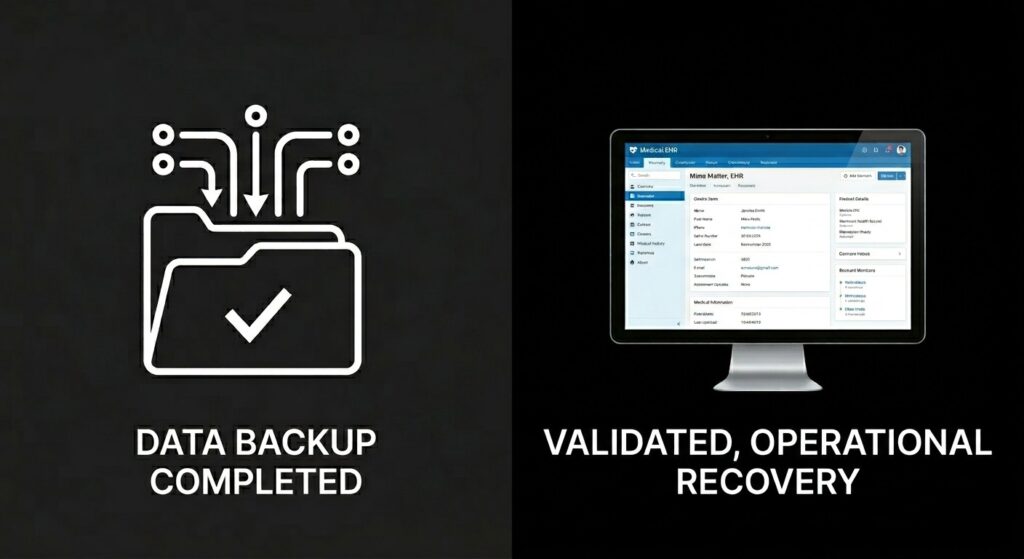
Backup completion validates that data was successfully copied, while verified recovery ensures that files are clean, uncorrupted, and ready for immediate clinical use.
For healthcare organizations, that risk affects more than IT. It can delay access to patient records, treatment history, prescriptions, imaging files, appointments, billing, claims, and compliance documentation.
A recovery-ready process should confirm that:
- the backup can be restored
- the data is usable
- critical systems are prioritized
- clean restore points are identified
- recovery steps are documented
- support is available during downtime
That is the practical value of verified recovery.
How CDS Compares with Veeam, Rubrik, and Druva for Healthcare Backup
Veeam, Rubrik, and Druva often appear in Acronis alternative searches because they are established options in enterprise backup, cyber recovery, and cloud data resilience.
If your team is also comparing Veeam specifically, see this guide to the best Veeam alternative for healthcare backup and recovery.
They can be strong choices for large organizations with complex infrastructure and internal IT teams. But not every healthcare organization needs an enterprise-scale data resilience platform.
| Option | Best Fit |
| Acronis | Organizations wanting broad cyber protection, backup, and endpoint security |
| Veeam | Larger environments needing enterprise backup and replication |
| Rubrik | Organizations prioritizing enterprise cyber recovery and immutability |
| Druva | Cloud-first teams needing SaaS-based data resilience |
| CDS | Healthcare organizations needing HIPAA-aligned backup, verified recovery, and clean restore support |
The best choice depends on scale, internal IT resources, compliance needs, and recovery expectations. CDS is strongest when healthcare-specific recovery confidence matters more than enterprise platform breadth.
When Acronis May Still Be a Good Fit
Acronis may still be a good fit when a healthcare organization wants one platform for backup, endpoint protection, malware defense, disaster recovery, and centralized cyber protection — and has a strong internal IT team to manage it.
Choose Acronis if you need backup, endpoint protection, malware defense, disaster recovery, and centralized cyber protection in one system, and your organization has a capable IT team that can configure, monitor, test, document, and maintain the platform.
Acronis is strongest when:
- platform consolidation is important
- workload coverage is broad
- internal IT can manage backup and security policies
- endpoint protection and backup need to live together
- restore testing is already handled internally
- the organization can maintain recovery documentation
- the team has resources to manage alerts, access controls, and recovery workflows
Acronis is not the wrong choice for every healthcare organization. The need for an alternative becomes stronger when the organization wants focused healthcare recovery support, verified clean restores, and practical help during downtime instead of a broader cyber protection stack.
When CDS is the Better Acronis Alternative for Healthcare
CDS may be the better Acronis alternative when a healthcare organization needs a partner focused on backup integrity, clean recovery, and patient data continuity.
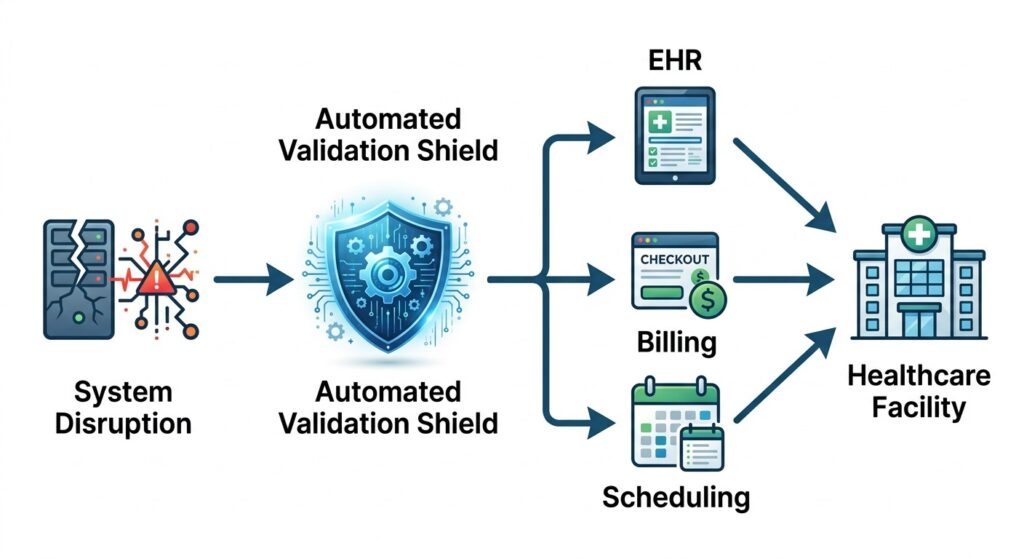
Protecting clinical workflows requires an intentional, validated recovery path that restores critical infrastructure in priority order.
CDS is a stronger fit when the organization needs:
- healthcare-first backup and recovery support
- verified clean restores
- HIPAA-aligned recovery documentation
- ransomware recovery support
- EHR, PHI, billing, scheduling, and practice data continuity
- help during real recovery events
The main difference is focus. Acronis is built as a broad cyber protection platform. CDS is positioned for healthcare organizations that want confidence that protected data can be restored cleanly when systems fail.
How to Choose the Right Acronis Alternative for Healthcare Backup
The right Acronis alternative should fit the organization’s data, compliance responsibilities, recovery goals, and internal IT capacity.
Before choosing a provider, healthcare teams should ask:
| Question | Why It Matters |
| Does the provider understand healthcare workflows? | EHR, PHI, scheduling, billing, claims, and imaging data require operational recovery planning |
| Are restore points tested? | Untested backups may fail during a real incident |
| Is there BAA support? | Vendor responsibility matters when PHI is involved |
| Are audit logs and access controls available? | Backup and recovery activity should be traceable |
| Can clean restore points be identified after ransomware? | Restoring infected data can extend disruption |
| Is recovery support available during downtime? | Healthcare teams need practical help under pressure |
A provider should make recovery clearer before, during, and after an incident. Backup storage is only useful if the data can return to service when the organization needs it.
Final Verdict: Is CDS the Right Acronis Alternative for Healthcare?
CDS is the right Acronis alternative when a healthcare organization needs focused backup, verified recovery, and clean restore support instead of a broad cyber protection platform.
Choose Acronis if you need backup, endpoint protection, malware defense, disaster recovery, and centralized cyber protection in one system, and your organization has a strong IT team to manage configuration, monitoring, testing, documentation, and recovery workflows.
Choose CDS if your priority is healthcare-focused recovery confidence: protecting PHI, restoring EHR and practice data, validating clean restore points, documenting recovery readiness, and reducing uncertainty after ransomware or downtime.
The decision should come down to one question:
Can your team restore clean, usable patient data when systems are unavailable?
If the answer is unclear, it is time to review your backup and recovery process. Healthcare organizations ready to evaluate their recovery readiness can speak with CDS about backup integrity, verified recovery, and ransomware restore planning.
FAQs About Acronis Alternatives for Healthcare Backup
What is the best Acronis alternative for healthcare backup?
The best Acronis alternative protects PHI, supports HIPAA-aligned recovery, verifies restore points, and helps restore EHR and practice data after ransomware or downtime.
Is a free Acronis alternative suitable for healthcare organizations?
Usually no. Free tools often lack BAA support, encryption, audit logs, access controls, restore testing, and PHI recovery documentation.
How hard is it to switch from Acronis to another backup provider?
Switching depends on data volume, protected systems, retention needs, and restore testing. Healthcare teams should migrate only after the new backup chain is tested.
Does healthcare backup need immutable storage?
Immutable storage helps prevent ransomware from changing or deleting recovery copies needed to restore PHI, EHR, and practice data.
Should healthcare teams compare backup pricing or recovery cost?
Compare total recovery cost, not just backup pricing. The real value is clean restore validation, downtime support, and predictable access to patient data.

![10 Best Backup Services for Healthcare Providers [2026 Comparison]](https://centraldatastorage.com/wp-content/uploads/2026/08/Backup-Services-for-Healthcare-Providers-400x250.png)