Is your healthcare organization prepared to recover critical patient data while meeting HIPAA requirements?The consequences of inadequate recovery preparedness can extend beyond data loss.
- A February 2026 peer-reviewed study published in the American Economic Journal: Economic Policy found that ransomware attacks reduced hospital volume by 17–24% during the initial week of an attack, highlighting how severely cyber incidents can disrupt healthcare operations (Source).
- Under 45 CFR § 164.308(a)(7), the HIPAA Security Rule requires covered entities and business associates to establish policies and procedures for responding to emergencies or other events that damage systems containing electronic protected health information (ePHI) (Source).
A HIPAA contingency plan goes beyond routine data backups. It includes five implementation specifications: data backup, disaster recovery, emergency mode operations, testing and revision, and applications and data criticality analysis.
This guide explains the regulatory requirements, distinguishes required from addressable specifications, and clarifies how backup and recovery support healthcare organizations’ contingency planning obligations.
What is a HIPAA Contingency Plan?
A HIPAA contingency plan establishes how a healthcare organization will protect and recover electronic patient information when unexpected events interrupt normal operations.
It addresses situations such as ransomware attacks, hardware failures, power outages, fires, or natural disasters that can make critical healthcare systems and patient records unavailable.
An effective contingency plan helps organizations:
- Preserve patient information: Maintain recoverable copies of critical electronic health records and other ePHI.
- Restore access to lost data: Establish procedures for recovering information after a disruption.
- Maintain essential operations: Support critical healthcare processes while normal systems are unavailable.
- Evaluate recovery readiness: Test and revise contingency procedures to identify weaknesses before an emergency.
An important part of contingency planning is determining when emergency procedures should be activated. Organizations should establish criteria for assessing disruptions, identify who can authorize the response, and define how affected personnel will be notified. These decisions help ensure that documented procedures can be put into action when normal operations are interrupted.
Unlike a standalone backup strategy, a contingency plan connects data protection, recovery, and emergency operations into a coordinated response.
What are the 5 HIPAA Contingency Plan Requirements?
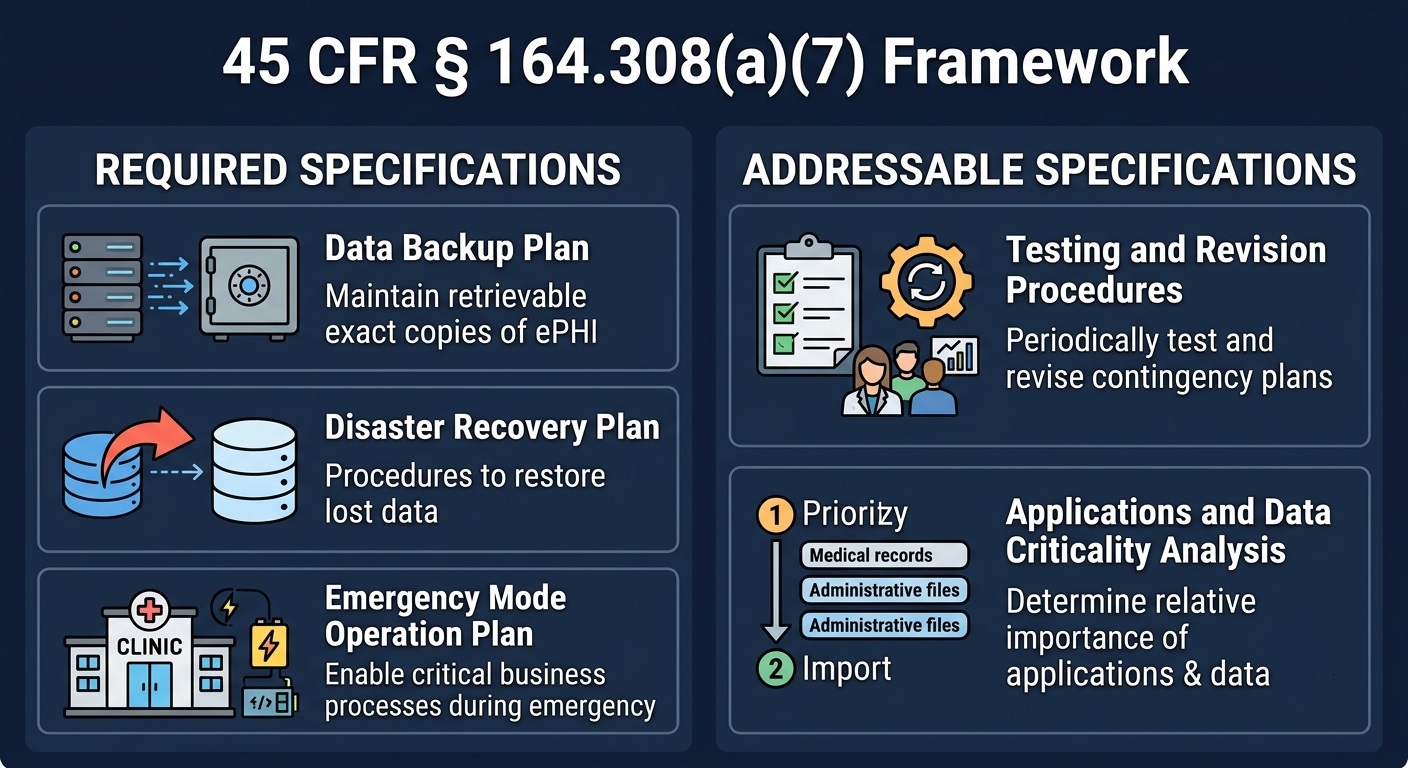
Under 45 CFR § 164.308(a)(7), the HIPAA Security Rule establishes five contingency planning specifications. Three are required, while two are addressable.
| Implementation Specification | Classification | Regulatory Purpose |
| Data Backup Plan | Required | Create and maintain retrievable exact copies of ePHI |
| Disaster Recovery Plan | Required | Establish procedures to restore lost data |
| Emergency Mode Operation Plan | Required | Continue critical business processes while protecting ePHI |
| Testing and Revision Procedures | Addressable | Periodically test and revise contingency plans |
| Applications and Data Criticality Analysis | Addressable | Assess the relative importance of applications and data |
1. Data Backup Plan: Retrievable Copies of ePHI (Required)
Healthcare organizations must establish and implement procedures for creating and maintaining retrievable exact copies of electronic protected health information (ePHI).
This includes ePHI maintained in systems such as:
- Electronic health records (EHRs) and patient charts.
- Laboratory results and diagnostic imaging records.
- Electronic prescriptions and treatment documentation.
- Billing systems containing patient health information.
HIPAA does not prescribe a specific backup technology or universal backup frequency under this provision. Organizations must establish appropriate procedures based on their systems, operational needs, and identified risks. For practical implementation guidance, see our article on how to build a healthcare backup plan.
2. Disaster Recovery Plan: Restoring Lost Data (Required)
Healthcare organizations must establish and implement procedures for restoring lost data following an emergency.
For example, if an EHR database becomes corrupted, the disaster recovery plan should establish how the affected information will be restored.
The HHS HIPAA Audit Protocol identifies recovery responsibilities and restoration procedures among the areas that may be evaluated.
The contingency plan provision does not establish a universal deadline for completing data restoration.
3. Emergency Mode Operation Plan: Maintaining Critical Operations (Required)
Healthcare organizations must establish procedures that enable critical business processes to continue while protecting ePHI during emergency operations.
For example, a medical practice may use temporary procedures for documenting patient care and securely accessing essential information while its EHR system is unavailable.
These are illustrative approaches rather than specific methods mandated by HIPAA.
Emergency mode operations focus on maintaining critical functions during a disruption, while disaster recovery focuses on restoring lost data.
4. Testing and Revision Procedures (Addressable)
This specification addresses periodically testing and revising contingency plans to evaluate their effectiveness and account for changes in organizational systems or operations.
Depending on the organization’s risks and circumstances, testing may include:
- Tabletop exercises simulating healthcare system outages.
- Reviews of emergency procedures and assigned responsibilities.
- Restoration tests to evaluate whether protected data can be recovered.
These are examples of possible testing approaches, not methods prescribed by HIPAA.
The contingency plan provision does not specify a universal annual testing frequency. Organizations must evaluate and address this specification according to HIPAA’s reasonable-and-appropriate standard.
5. Applications and Data Criticality Analysis (Addressable)
This specification addresses evaluating the relative importance of applications and data to support contingency planning. A criticality analysis helps organizations determine which systems and information should receive priority during recovery.
For example, a hospital may prioritize systems supporting active patient treatment over noncritical administrative reporting applications.
Recovery priorities should reflect the organization’s operational requirements, system dependencies, and identified risks rather than a universal sequence prescribed by HIPAA.
What does “addressable” mean under HIPAA?
Addressable does not mean optional. Organizations must evaluate whether an addressable specification is reasonable and appropriate for their environment and implement it when appropriate. If it is not appropriate, they must document the decision and determine whether an alternative measure is reasonable and appropriate. When neither the specification nor an alternative is appropriate, the rationale must also be documented.
While these requirements reflect the current HIPAA Security Rule, additional changes have been proposed, with final regulatory action currently projected for 2027. Learn more about the proposed HIPAA Security Rule changes and their potential implications for healthcare organizations.
How Do Backup and Disaster Recovery Support a HIPAA Contingency Plan?
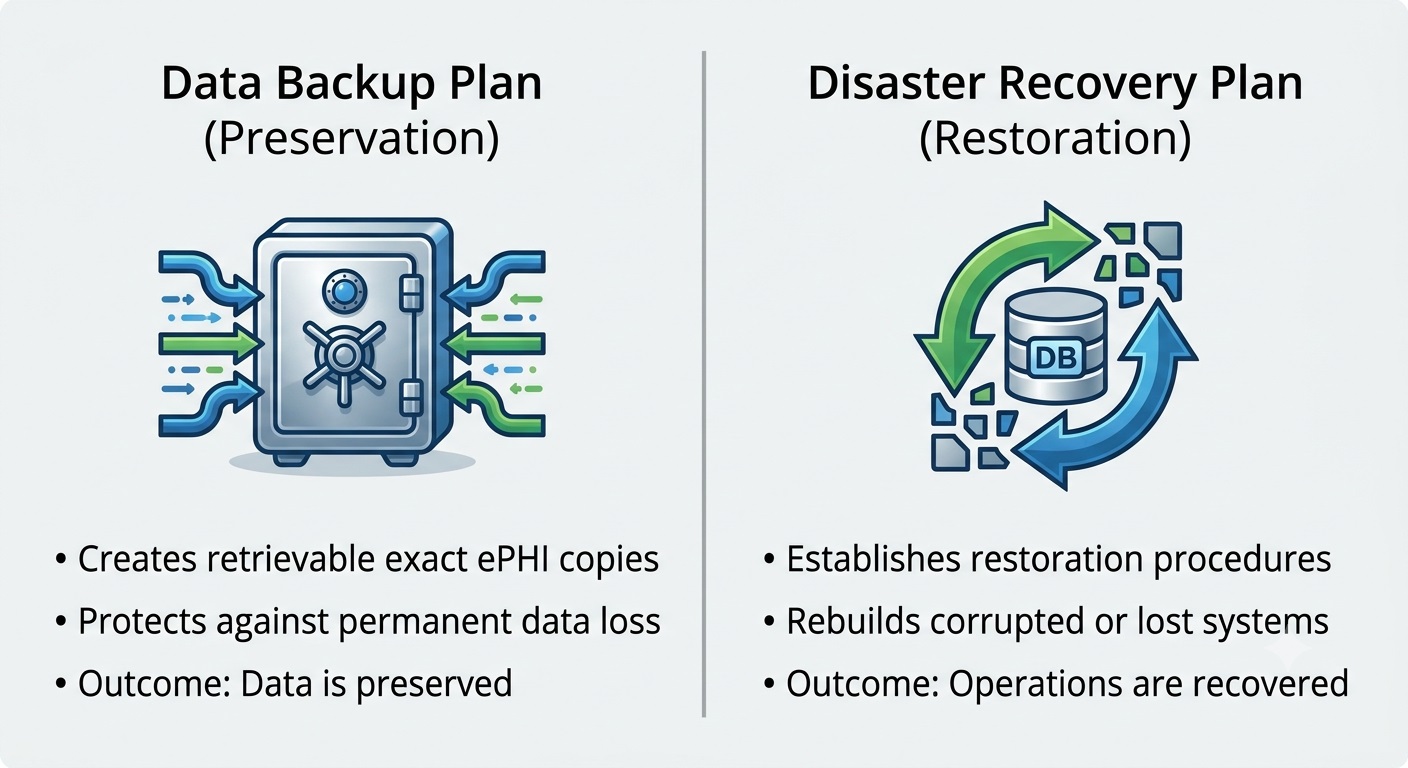 Data backup and disaster recovery serve different but connected purposes within a HIPAA contingency plan.
Backups preserve copies of electronic protected health information (ePHI), while disaster recovery establishes how lost information can be restored. Both support the broader objective of maintaining access to critical healthcare information during disruptions.
The distinction becomes clearer when comparing their roles:
| Component | Primary Function | Expected Outcome |
| Contingency Plan | Coordinates the organization’s response to emergencies affecting ePHI | Critical information and operations remain protected during disruptions |
| Data Backup Plan | Preserves retrievable copies of ePHI | Information is available for restoration |
| Disaster Recovery Plan | Defines procedures for restoring lost data | Affected information can be recovered |
| Emergency Mode Operation Plan | Establishes procedures for continuing critical processes | Essential operations can continue during an emergency |
Why Backup Success Does Not Guarantee Recoverability
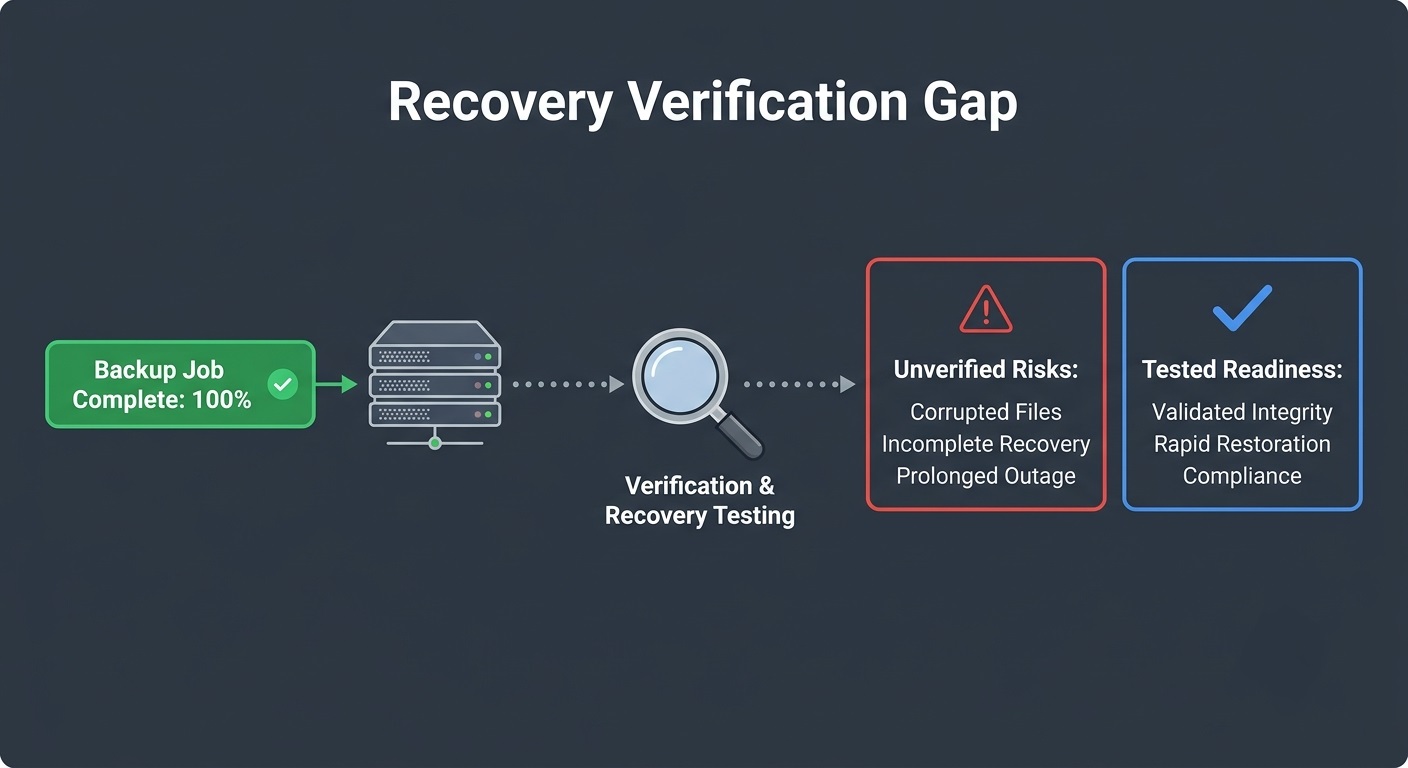
A successful backup job does not, by itself, establish that all required patient information can be restored accurately and made usable after an outage.
For example, a healthcare organization may have recent backup copies but discover during restoration that certain files are corrupted, incomplete, or inaccessible.
Backup verification and recovery testing help identify these issues before an emergency. By evaluating whether protected data can be restored successfully, healthcare organizations can better assess their recovery readiness.
Learn how CDS supports backup verification and recovery for healthcare organizations.
Who is Responsible for a HIPAA Contingency Plan?
Healthcare organizations and business associates must implement contingency planning safeguards appropriate to their responsibilities. Although IT teams and external service providers may handle specific recovery activities, each regulated organization remains accountable for meeting its applicable HIPAA obligations.
Organizations should assign clear responsibilities for maintaining contingency procedures, coordinating emergency responses, and overseeing recovery arrangements. When business associates are involved, their responsibilities should be established through appropriate agreements.
Contingency planning should also reflect the organization’s security risk analysis. Identifying threats, vulnerabilities, system dependencies, and the potential consequences of unavailable patient information helps healthcare organizations determine which contingency safeguards and recovery arrangements are reasonable and appropriate for their operations.
What HIPAA Contingency Plan Documentation Should Be Maintained?
The HIPAA Security Rule requires regulated organizations to maintain written or electronic documentation of their security policies and procedures, along with records of activities and assessments that must be documented under the rule.
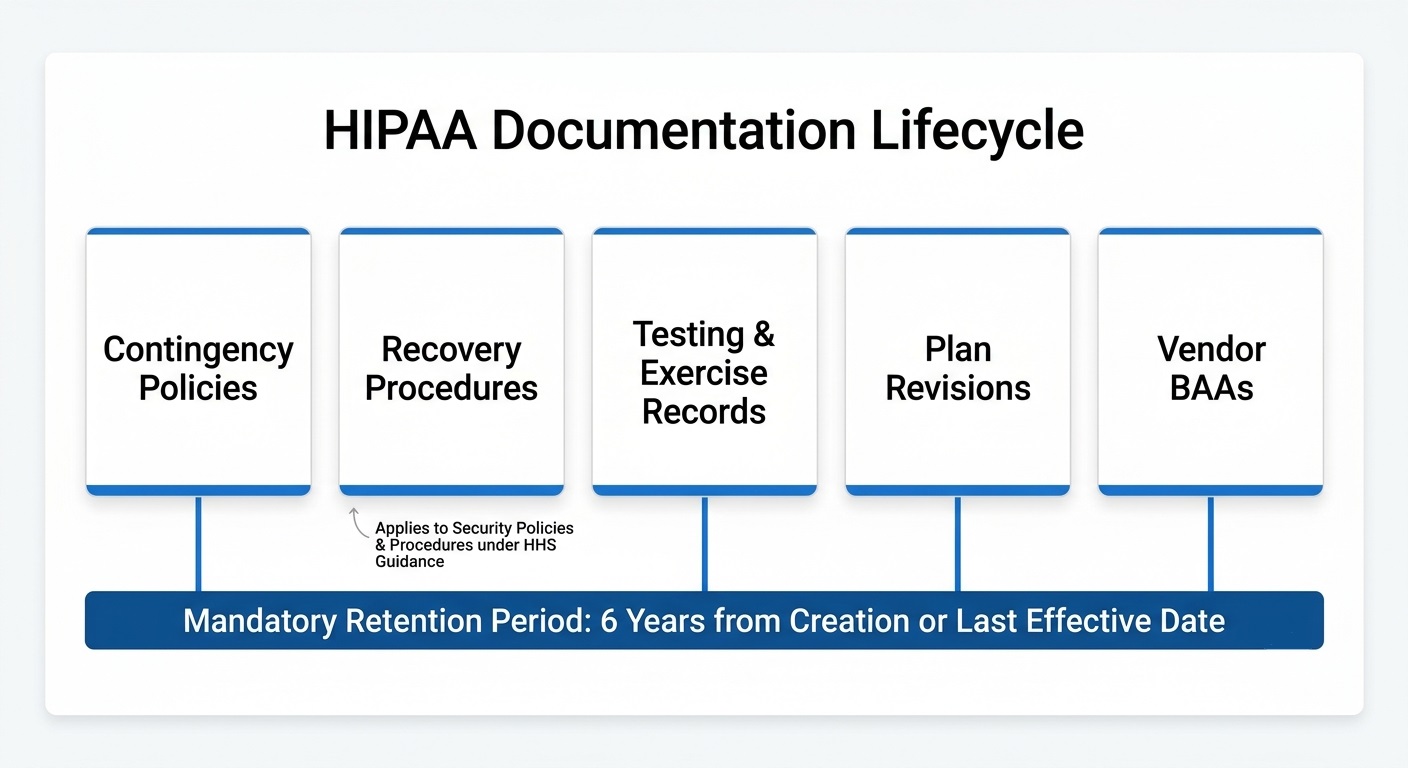
Relevant contingency planning records may include:
- Contingency policies: Approved procedures outlining emergency responsibilities and response arrangements.
- Recovery procedures: Documented steps for restoring affected information and systems.
- Testing records: Results of contingency exercises or recovery tests, where applicable.
- Plan revisions: Updates reflecting changes in systems, personnel, or identified risks.
- Vendor agreements: Business Associate Agreements (BAAs) defining relevant contractual responsibilities.
These records help demonstrate how contingency planning procedures are established and maintained. Not every example listed is a separately mandated document.
According to the HHS HIPAA Security Rule guidance, required Security Rule documentation must generally be retained for six years from its creation or the date it was last in effect, whichever is later. This is distinct from medical record retention requirements.
A backup and recovery provider can support these responsibilities by supplying protected data copies, restoration capabilities, and relevant service documentation. However, the healthcare organization must maintain oversight of its overall contingency planning arrangements.
Central Data Storage’s HIPAA-aligned backup services help healthcare organizations address the backup and recovery components of their contingency planning responsibilities.
Conclusion: A HIPAA Contingency Plan Goes Beyond Data Backup
A HIPAA contingency plan is more than a safeguard against data loss. It establishes how healthcare organizations prepare for disruptions, restore essential information, and maintain critical operations while protecting electronic protected health information (ePHI).
Meeting these obligations requires clearly defined responsibilities, appropriate recovery procedures, and ongoing evaluation of contingency arrangements.
While healthcare organizations remain responsible for their overall HIPAA compliance, a reliable backup and recovery provider can support their ability to restore critical patient information when needed.
Not sure whether your current backup and recovery arrangements adequately support your HIPAA contingency plan?
Request a Data Risk & Recovery Assessment from Central Data Storage to evaluate backup integrity, restore readiness, and potential recovery gaps before an emergency disrupts patient care.
HIPAA Contingency Plans FAQs
Does a HIPAA Contingency Plan Apply to Paper Medical Records?
The HIPAA Security Rule’s contingency planning standard applies to electronic protected health information (ePHI), not paper records. However, paper medical records remain subject to applicable HIPAA Privacy Rule safeguards and other record-protection obligations.
Does HIPAA Require a Specific Contingency Plan Template?
No. HIPAA does not prescribe a standardized contingency plan template. Healthcare organizations may develop procedures appropriate to their size, systems, operational risks, and resources, provided they satisfy applicable Security Rule requirements.
When Should a HIPAA Contingency Plan Be Activated?
Healthcare organizations should activate applicable contingency procedures when a disruption meets their established response criteria. These procedures should identify who authorizes activation, which critical systems or processes are affected, and how relevant personnel are notified. HIPAA does not prescribe a universal activation threshold.
HIPAA Contingency Plan vs. Incident Response Plan: What’s the Difference?
A contingency plan addresses emergencies affecting systems containing ePHI, including data recovery and continuity of critical operations. A security incident response plan addresses identifying, responding to, mitigating, and documenting suspected or known security incidents. The two plans may coordinate during a cyberattack.
Can Multiple Healthcare Facilities Share One Contingency Plan?
HIPAA does not prescribe a separate contingency plan document for every facility. A healthcare organization may use a coordinated planning framework, provided its procedures appropriately address the systems, operational dependencies, risks, and recovery needs of each relevant location.