Healthcare organizations manage some of the most sensitive data in any industry. Patient records include medical histories, diagnostic results, insurance information, and personally identifiable data. As healthcare systems adopt cloud platforms and third-party technologies, regulators are placing greater emphasis on where healthcare data is stored and how organizations maintain oversight of it.
Texas Senate Bill 1188 (SB 1188) reflects this shift toward stronger data residency and governance expectations in healthcare technology environments. The legislation introduces requirements that affect how healthcare organizations and their technology vendors manage patient records.
Healthcare providers evaluating the impact of SB 1188 should consider several operational questions:
- Where is patient data physically stored?
- Which vendors manage or process patient records?
- Can the organization verify the storage location of sensitive information?
- Do existing systems provide clear governance over patient data?
Answering these questions helps healthcare organizations maintain regulatory alignment while strengthening the security and resilience of their healthcare technology environments.
Understanding Texas SB 1188 and Healthcare Data Residency Requirements
Texas SB 1188 introduces requirements designed to improve oversight of electronic patient information associated with Texas residents. The law reinforces that healthcare organizations must maintain governance over the systems and infrastructure environments storing patient data.
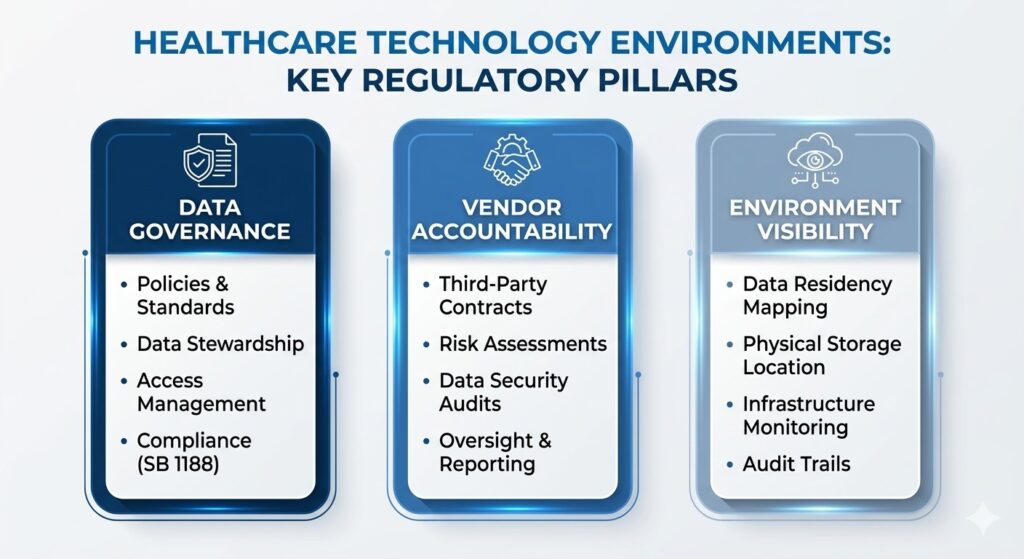
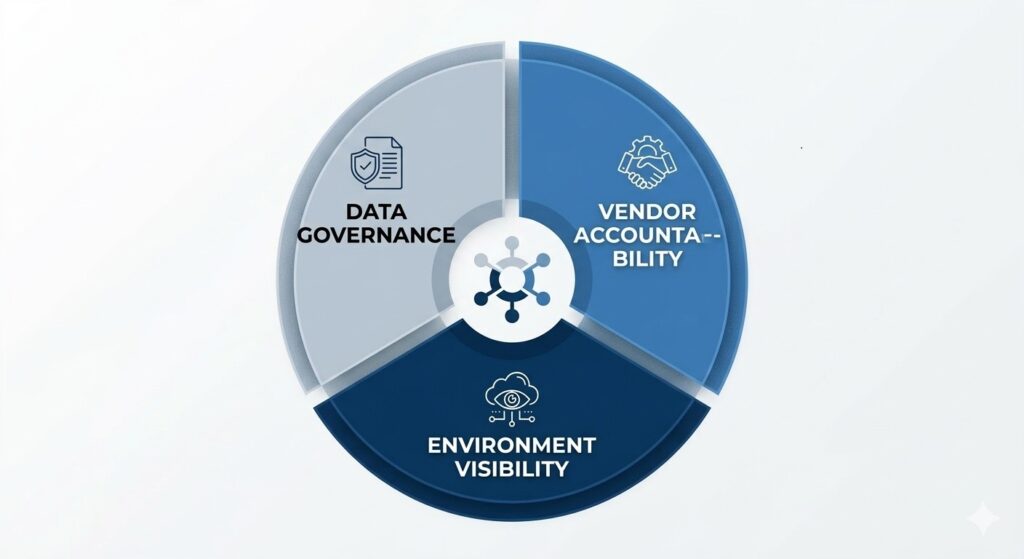
A triangular or three-pillar diagram showcasing the core priorities of the Texas legislation.
For healthcare providers and technology vendors, the legislation highlights three priorities:
- data governance
- vendor accountability
- visibility into healthcare data environments
Understanding the scope of SB 1188 helps healthcare organizations evaluate whether their current technology environments support regulatory expectations.
What Texas SB 1188 Regulates for Healthcare Data
Texas SB 1188 focuses on the handling and storage of electronic health information generated through healthcare systems.
The legislation introduces expectations related to:
- the storage location of electronic health records
- the role of technology vendors managing patient data systems
- oversight responsibilities for healthcare providers
These requirements are intended to ensure that sensitive healthcare data remains managed within environments subject to appropriate jurisdictional oversight.
Why Texas Introduced Data Residency Requirements for Patient Records
Healthcare data has become one of the most valuable and frequently targeted forms of digital information. As healthcare organizations adopt distributed technology environments, regulators have increased scrutiny over where patient information is stored and how it is protected.
Several factors are driving this regulatory focus:
- increasing cyberattacks targeting healthcare systems
- rapid growth in digital patient records
- reliance on third-party healthcare technology platforms
According to IBM’s Cost of a Data Breach Report, the average healthcare data breach costs $10.93 million, making healthcare the most expensive industry for data breaches. [source]
Because patient records contain sensitive clinical and financial information, regulators expect healthcare organizations to maintain clear oversight of the infrastructure environments storing patient data.
Key Data Residency Provisions in Texas SB 1188
SB 1188 introduces several governance expectations for organizations managing patient records within Texas healthcare systems.
| Provision | Description |
| Data residency expectations | Certain healthcare data must remain within approved jurisdictions |
| Vendor accountability | Technology providers must support compliant data handling |
| Organizational oversight | Healthcare providers remain responsible for patient data governance |
| Transparency requirements | Organizations must be able to demonstrate where data is stored |
These provisions reinforce that outsourcing infrastructure does not eliminate responsibility for healthcare data governance.
Timeline and Enforcement of Texas SB 1188
Healthcare regulations typically include implementation timelines that allow organizations to review their technology environments.
Healthcare providers should evaluate:
- vendor agreements governing patient data
- systems storing electronic health records
- how healthcare data moves across platforms
Understanding what types of healthcare data fall under SB 1188 is the next step.
What Healthcare Data is Covered by Texas SB 1188?
SB 1188 primarily applies to electronic healthcare information generated through clinical systems.
Healthcare organizations must understand not only what data they collect but also where that data resides and how it moves across systems.
Healthcare Organizations Subject to Texas SB 1188
The law applies to patient records stored within electronic healthcare platforms.
Common categories include:
- electronic health records (EHRs)
- patient demographic information
- clinical notes and treatment histories
- diagnostic and laboratory results
- imaging records and reports
- prescription and medication histories
- billing and insurance records tied to medical care
These records collectively form a patient’s digital health profile, making them a central focus of healthcare data governance.
Healthcare Organizations Subject to Texas SB 1188
SB 1188 affects organizations that create, manage, or store patient health information.
Examples include:
| Organization | Role |
| Hospitals and health systems | Maintain clinical record systems |
| Physician practices | Generate and manage patient records |
| Specialty clinics | Store diagnostic and treatment data |
| Healthcare technology vendors | Provide systems that process patient data |
| Health information platforms | Facilitate record sharing between providers |
Healthcare organizations remain responsible for data governance even when vendors operate the underlying technology infrastructure.
Responsibilities of Healthcare Technology Vendors and Service Providers
Healthcare organizations often rely on vendors to host or process patient information. Vendors supporting healthcare systems must provide transparency regarding how and where healthcare data is stored and managed.
Vendor responsibilities typically include:
- documenting data storage locations
- supporting secure patient data handling
- providing visibility into data environments
- preventing uncontrolled cross-border data transfers
Healthcare organizations should verify that vendors provide clear documentation of infrastructure environments handling patient data.
Data Storage vs Remote Access in Healthcare Systems
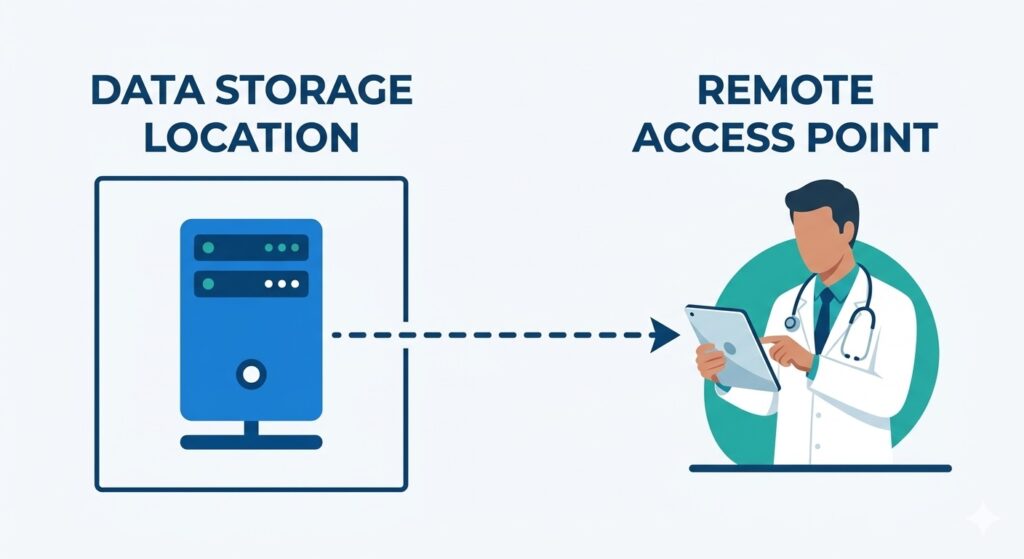
Governance requirements apply to the physical infrastructure, regardless of where the data is viewed.
Healthcare data governance requires distinguishing between where data is stored and where it can be accessed.
| Scenario | Explanation |
| Data storage | Infrastructure location where patient records reside |
| Remote access | Authorized users retrieving records from other locations |
Healthcare professionals may access patient records remotely, but the infrastructure storing those records must still comply with regulatory expectations regarding data location and governance.
Compliance Responsibilities for Healthcare Organizations Under Texas SB 1188
Complying with SB 1188 requires organizations to maintain operational oversight of patient data across technology systems.
Compliance involves implementing governance processes that ensure transparency across infrastructure environments.
Operational Responsibilities for Healthcare Providers Managing Patient Data
Healthcare providers remain responsible for protecting patient data regardless of which platforms or vendors operate their systems.
Operational responsibilities include:
- maintaining records of systems storing patient data
- establishing internal data governance policies
- monitoring how data moves across platforms
- enforcing role-based access controls
These practices help ensure that patient information remains properly governed.
Vendor Management and Oversight for Healthcare Data Systems
Healthcare organizations rely on vendors to operate critical systems such as:
- electronic health record platforms
- patient portals
- healthcare analytics tools
- infrastructure hosting services
Organizations must ensure vendors support transparent healthcare data governance practices.
Key oversight activities include:
- verifying vendor data storage locations
- reviewing vendor infrastructure documentation
- confirming how vendors replicate or transfer data
- defining governance responsibilities in vendor contracts
Legal and Financial Risks of Healthcare Data Non-Compliance
Failure to maintain governance over healthcare data can expose organizations to serious risks, including:
- regulatory penalties
- legal liability after data incidents
- operational disruptions during investigations
Healthcare data incidents can be extremely costly. The average healthcare data breach costs $10.93 million, reinforcing the need for strong data governance and protection strategies. [source]
Relationship Between Texas SB 1188 and Federal Healthcare Privacy Regulations
Healthcare organizations must navigate multiple overlapping regulatory frameworks.
| Regulation Type | Purpose |
| Federal healthcare privacy regulations | Establish baseline protection for patient data |
| State legislation | Introduce additional jurisdiction-specific requirements |
| Industry standards | Provide best practices for healthcare data governance |
Technology environments must support compliance across these regulatory layers simultaneously.
Technology and Infrastructure Implications of Healthcare Data Residency Laws
Healthcare organizations operate increasingly complex technology ecosystems that combine cloud infrastructure, clinical platforms, and vendor-managed systems.
These environments can complicate efforts to track where patient information resides.
How Data Residency Requirements Affect Healthcare IT Infrastructure
Healthcare data may exist across multiple systems, including:
- EHR platforms
- imaging systems
- laboratory systems
- billing and insurance systems
- patient engagement platforms
Healthcare organizations must maintain documentation that identifies:
- systems storing patient data
- infrastructure environments hosting those systems
- how healthcare data moves across platforms
Without clear documentation, demonstrating regulatory compliance becomes difficult.
Cloud Infrastructure Considerations for Healthcare Data Residency
Cloud platforms provide scalability but can introduce complexity when verifying data storage locations.
Healthcare IT teams should evaluate:
- infrastructure regions used by cloud platforms
- vendor replication practices
- whether organizations can control storage locations
- the level of visibility into data residency controls
Understanding these factors helps organizations maintain oversight of healthcare data environments.
Cross-Border Data Transfers and Replication Risks in Healthcare Systems
Healthcare systems often rely on automated replication processes.
| Scenario | Description |
| Data replication | Systems duplicate records across infrastructure locations |
| System synchronization | Applications update patient data across platforms |
| Data analytics processing | Patient information processed within external computing environments |
If not governed properly, these processes can introduce unintended cross-border data transfers.
Documenting and Governing Healthcare Data Storage Locations
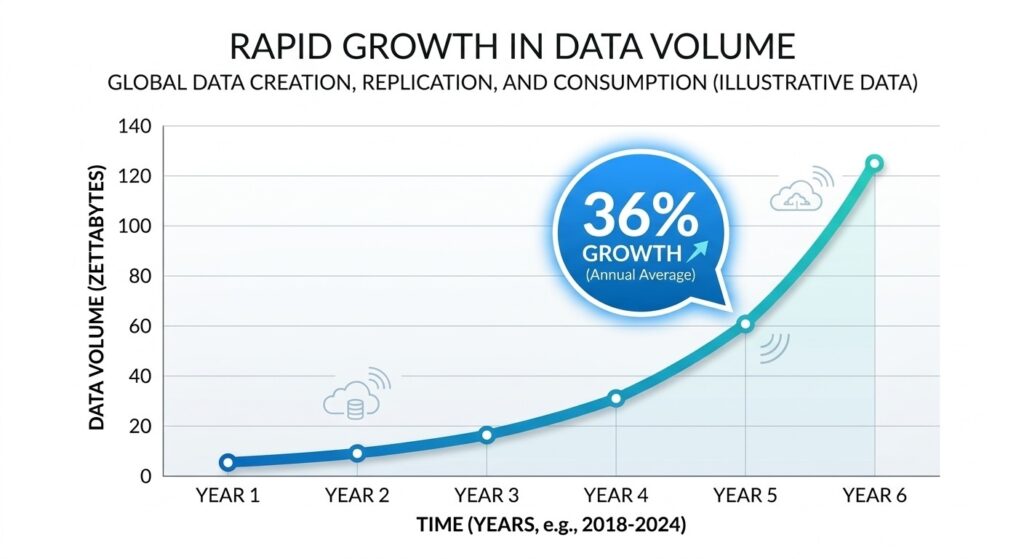
Rapid data growth increases the complexity of maintaining visibility and compliance.
Overlay Text: “36% ANNUAL DATA GROWTH”
Compliance depends on an organization’s ability to document where healthcare data resides.
Effective governance practices include:
- maintaining system inventories for patient data platforms
- mapping data flows between systems
- reviewing vendor architecture documentation
- performing periodic technology environment assessments
Healthcare data volumes continue to expand rapidly. Industry estimates indicate healthcare data is growing by approximately 36% annually, increasing the complexity of maintaining data visibility. [source]
Organizations that regularly review their healthcare data protection strategies can better maintain governance over patient information.
Operational Challenges of Managing Healthcare Data Residency
Implementing governance requirements across complex technology ecosystems can be difficult. Healthcare environments often involve multiple vendors, applications, and infrastructure providers.
Managing Third-Party Healthcare Technology Vendors
Healthcare providers depend on vendors to operate systems storing patient information.
Examples include:
- EHR systems
- analytics platforms
- cloud infrastructure providers
- patient communication platforms
Healthcare organizations must ensure vendors provide clear documentation of how patient data is stored and managed.
Auditing Where Healthcare Patient Records Are Stored
Technology environments evolve over time as organizations adopt new platforms and integrations.
Regular audits help identify:
- systems storing patient records
- vendor infrastructure environments
- legacy platforms retaining sensitive data
Many healthcare organizations conduct a data risk and recovery assessment to better understand how patient information moves across their systems.
Coordinating Data Residency Compliance Across Healthcare Systems
Healthcare organizations typically operate multiple interconnected systems.
Governance processes often include:
| Governance Activity | Purpose |
| System inventory tracking | Identify systems storing patient data |
| Data flow mapping | Understand how data moves across systems |
| Vendor documentation reviews | Verify infrastructure practices |
| Compliance assessments | Confirm systems remain aligned with regulations |
Maintaining Visibility Over Patient Data Movement
Patient data frequently moves between systems through integrations and automated workflows.
Examples include:
- transferring laboratory results into EHR platforms
- synchronizing patient portals
- sharing billing data with administrative systems
Monitoring these workflows helps organizations maintain oversight of patient data environments.
Strengthening Healthcare Data Governance and Infrastructure Oversight
Healthcare regulations increasingly emphasize visibility and oversight of healthcare data infrastructure.
Organizations must implement governance processes that track where patient information resides and how systems manage that data.
Why Visibility Into Healthcare Data Locations Matters
Maintaining visibility allows organizations to:
- identify systems storing patient records
- confirm vendor infrastructure environments
- detect unintended data transfers
- document compliance during regulatory reviews
Infrastructure Oversight in Healthcare Data Compliance
Healthcare data governance requires oversight of the infrastructure environments hosting clinical systems.
Organizations should document:
| Governance Element | Purpose |
| Infrastructure environments | Identify where healthcare systems operate |
| Vendor architecture | Understand vendor data management practices |
| Replication processes | Track how systems duplicate patient data |
| Access control policies | Ensure authorized access to patient records |
Organizations that review their healthcare data protection strategies regularly maintain stronger oversight of patient data environments.
How Healthcare Infrastructure Providers Support Data Compliance
Many healthcare organizations partner with providers that specialize in healthcare technology infrastructure and regulatory environments.
These providers often support:
- controlled infrastructure environments for healthcare workloads
- improved visibility into healthcare data environments
- documentation supporting regulatory reviews
- governance processes that track patient data systems
Preparing Healthcare Systems for Evolving Data Residency Regulations
Healthcare regulations continue evolving as digital healthcare environments expand.
Organizations that treat compliance as an ongoing governance process are better prepared for regulatory changes.
Reviewing Healthcare Data Storage Policies
Healthcare organizations should review policies governing:
- where patient data is stored
- which systems manage clinical records
- how sensitive information is handled
- how long healthcare data is retained
Assessing Vendor Agreements for Healthcare Data Governance
Vendor contracts should clearly define healthcare data governance expectations.
| Agreement Element | Importance |
| Data storage location | Identifies where patient information resides |
| Infrastructure transparency | Provides visibility into vendor environments |
| Data transfer practices | Prevents unintended data movement |
| Governance controls | Supports regulatory compliance |
Developing Internal Healthcare Data Governance Processes
Effective governance includes structured processes such as:
- maintaining system inventories
- documenting data flows
- reviewing vendor infrastructure practices
- conducting internal compliance assessments
More than 90% of healthcare organizations must comply with multiple federal and state privacy regulations simultaneously, making coordinated governance essential. [source]
Building Long-Term Healthcare Data Residency Strategies
Healthcare organizations benefit from long-term governance strategies that prioritize:
- approved environments for patient data storage
- improved visibility into data locations
- governance across healthcare technology systems
- partnerships with infrastructure providers experienced in healthcare environments
How Central Data Storage (CDS) Helps Healthcare Organizations Protect and Recover Patient Data?
Continuous availability depends on a verified recovery process and resilient architecture.
Regulatory developments such as Texas SB 1188 highlight an important reality: healthcare providers remain responsible for protecting patient data and maintaining access to it, regardless of where systems or applications are hosted.
Meeting these expectations requires more than identifying where data is stored. Healthcare organizations must also ensure that patient information remains secure, recoverable, and continuously available during cyber incidents, infrastructure failures, or operational disruptions.
Central Data Storage (CDS) provides healthcare-focused backup and recovery solutions designed to protect critical healthcare data and maintain operational continuity.
CDS helps healthcare organizations strengthen resilience by providing:
- secure backup environments for electronic health records and clinical systems
- verified recovery processes that confirm restored data is clean and uncompromised
- ransomware-resilient backup architecture protecting recovery points
- infrastructure transparency that improves visibility into protected healthcare data
Unlike many backup vendors that rely entirely on hyperscale cloud providers, CDS operates a controlled infrastructure environment designed specifically for healthcare workloads. This approach helps healthcare organizations maintain greater oversight of how sensitive patient data is protected and recovered.
For healthcare providers navigating regulatory requirements, cybersecurity threats, and operational risk, the ability to restore critical patient data quickly and safely is essential.
CDS focuses on delivering clean, verified recovery and resilient healthcare data protection so organizations can maintain continuity of care while operating within an increasingly complex regulatory environment.
Texas SB 1188 FAQS
Does Texas SB 1188 require healthcare data backups to stay in the United States?
Texas SB 1188 does not explicitly require healthcare data backups to stay in the United States, but healthcare organizations must maintain governance and oversight over where patient records—including backups—are stored if they contain regulated health data.
How does Texas SB 1188 affect healthcare cloud providers?
Texas SB 1188 requires healthcare organizations to maintain oversight of vendors that store or process patient records. Cloud providers must disclose where healthcare data resides and support governance controls that allow organizations to verify storage locations.
Why is data recovery important for healthcare data residency compliance?
Healthcare organizations must ensure patient records remain accessible and recoverable during cyber incidents or system failures. Reliable backup and recovery systems help providers restore critical healthcare data while maintaining governance over where patient records are stored.
What risks do ransomware attacks create for healthcare data residency compliance?
Ransomware attacks can encrypt or destroy patient records stored in healthcare systems. Organizations must maintain secure backup and recovery environments to restore patient data and ensure healthcare operations continue without violating governance requirements.
How can healthcare organizations verify where patient data is stored?
Healthcare organizations verify data location by maintaining system inventories, reviewing vendor infrastructure documentation, and monitoring data flows between healthcare platforms. Governance processes help organizations demonstrate where patient records reside.
Last updated on March 17, 2026