Healthcare organizations store large volumes of electronic protected health information (ePHI) across systems such as Electronic Health Records (EHR), PACS imaging platforms, clinical databases, and practice management systems. These systems must remain accessible for patient care, regulatory compliance, and operational continuity.
Ransomware attacks increasingly target healthcare environments because operational disruption pressures organizations to restore systems quickly.
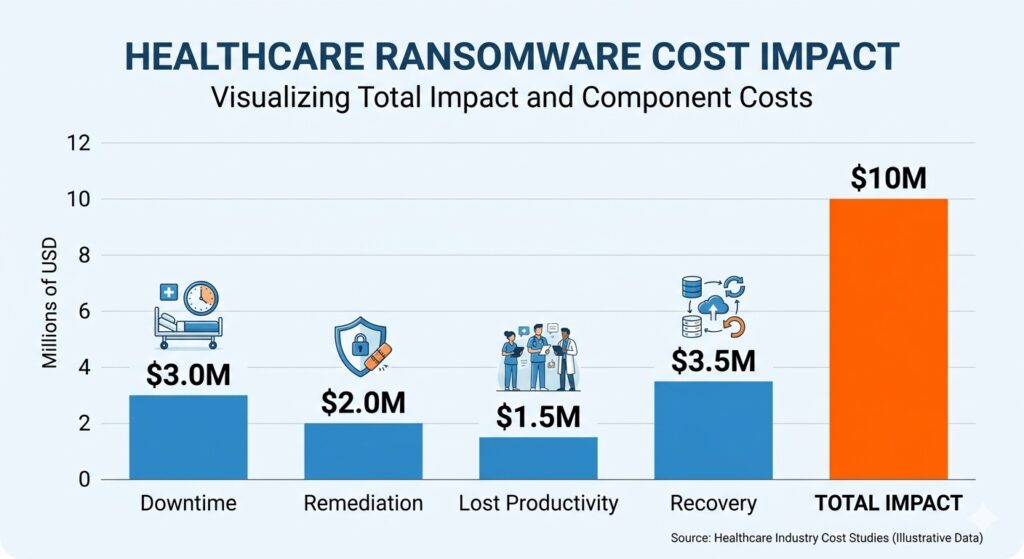
Ransomware incidents represent a significant financial and operational threat to healthcare providers.
Industry studies report that the average ransomware incident in healthcare can exceed $10 million in total impact, including downtime, remediation, lost productivity, and recovery operations. [source]
When clinical systems become unavailable, healthcare providers may face:
- disruption to patient care
- delayed diagnostics and treatment
- HIPAA compliance risks
- financial losses caused by operational downtime
Reliable backup architecture protects healthcare data from these failures.
The 3-2-1-1-0 backup rule provides a structured framework that ensures healthcare organizations maintain recoverable backup copies even when ransomware compromises production systems.
What is the 3-2-1-1-0 Backup Rule?
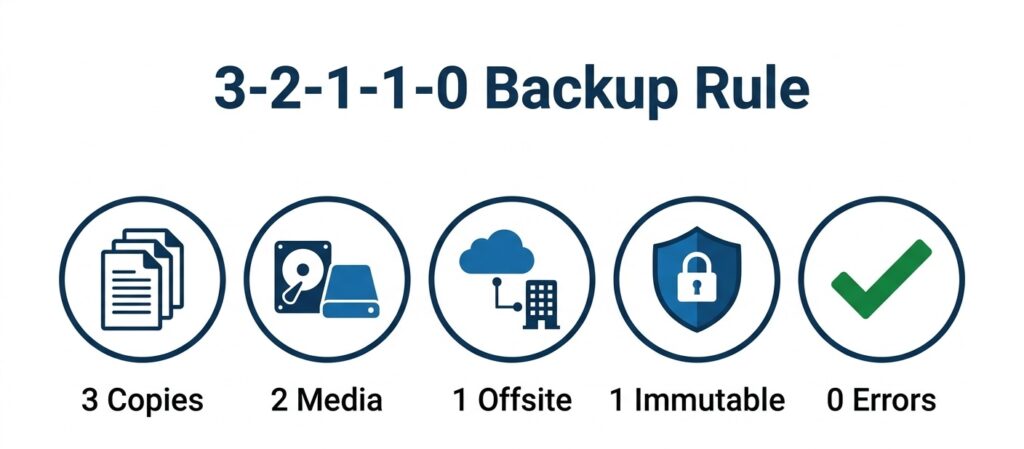
The 3-2-1-1-0 rule provides a comprehensive roadmap for healthcare data resilience.
The 3-2-1-1-0 backup rule is a modern data protection strategy designed to ensure organizations can recover data after ransomware attacks, hardware failures, or accidental deletion.
It expands the traditional 3-2-1 backup rule by adding:
- 1 immutable or air-gapped backup copy
- 0 backup errors verified through recovery testing
Healthcare organizations use this model to protect critical systems such as:
- Electronic Health Records (EHR)
- PACS and DICOM imaging systems
- laboratory information systems
- practice management platforms
- clinical databases storing patient records
The goal is simple: guaranteed recoverability of healthcare data.
Breaking Down the 3-2-1-1-0 Backup Model
| Rule Element | Requirement | Function |
| 3 | Maintain three copies of data | Provides redundancy if one copy fails |
| 2 | Use two different storage media | Protects against hardware failure |
| 1 | Store one copy offsite | Protects against facility disasters |
| 1 | Maintain an immutable backup | Protects backups from ransomware |
| 0 | Verify backups through restore testing | Confirms recovery success |
This structure protects healthcare organizations from common failure scenarios such as corrupted backups, deleted snapshots, or compromised storage environments.
Why “Zero Backup Errors” Matters?
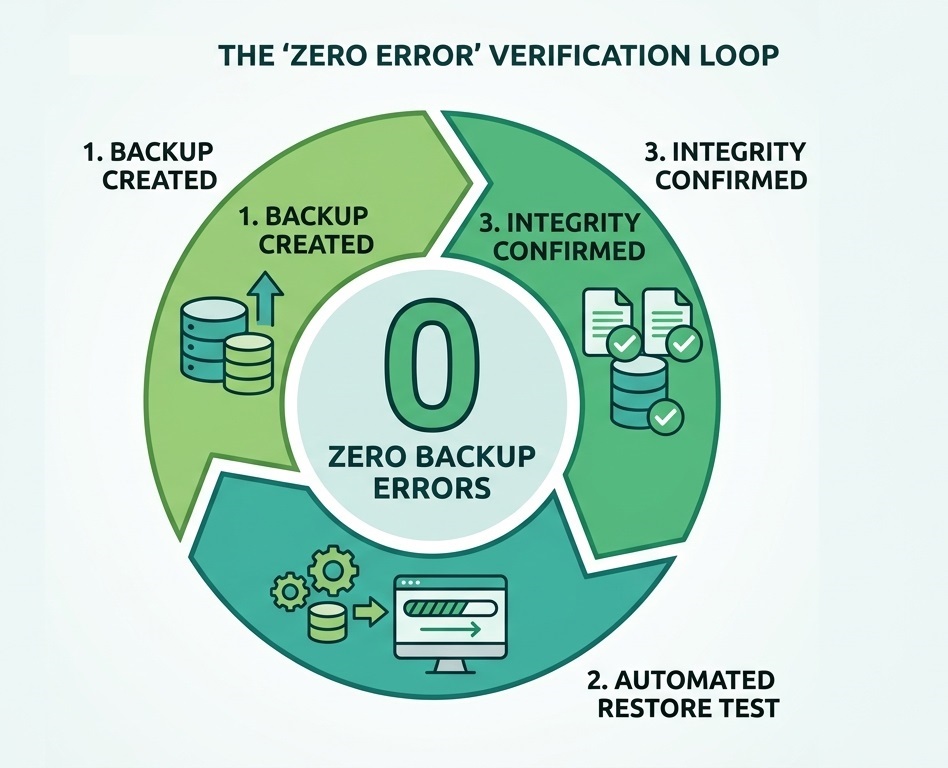
The final ‘0’ in 3-2-1-1-0 stands for zero errors, achieved through continuous testing.
The final “0” in the 3-2-1-1-0 rule emphasizes backup verification, ensuring that every backup is tested and recoverable rather than simply assuming the process succeeded.
Backup systems often report successful jobs even when recovery later fails due to:
- corrupted backup files
- incomplete database backups
- missing application dependencies
- incompatible recovery points
Organizations confirm backup reliability through restore testing and integrity validation.
Typical verification processes include:
- automated restore testing
- recovery validation in isolated environments
- backup integrity checks
Testing confirms that EHR databases, imaging systems, and clinical applications can be restored without errors.
Why Do Healthcare Organizations Need the 3-2-1-1-0 Backup Rule?
Healthcare organizations rely on structured backup strategies like the 3-2-1-1-0 rule as part of a broader healthcare data protection strategy that safeguards electronic health records, imaging data, and patient information.
When these systems become unavailable, patient care may stop.
Healthcare is one of the most targeted industries for ransomware attacks, and recovery can take days or weeks when backups fail.
The 3-2-1-1-0 backup rule reduces this risk by ensuring that:
- multiple backup copies exist
- backup storage environments are separated
- at least one backup copy cannot be modified
- recovery testing confirms backup reliability
This architecture ensures healthcare organizations can restore systems even when attackers compromise production infrastructure.
Critical Healthcare Systems That Require Backup Protection
Healthcare environments operate many interconnected systems storing patient data.
Examples include:
- Electronic Health Records (EHR) containing patient charts and prescriptions
- PACS imaging systems storing CT scans and MRI images
- laboratory information systems managing diagnostic results
- practice management software supporting scheduling and billing
- clinical databases storing treatment data and operational records
Backup strategies must protect both structured databases and large imaging files.
How Ransomware Targets Healthcare Backup Systems
Modern ransomware attacks often attempt to disable backups before encrypting production data.
Common attack methods include:
- deleting backup snapshots
- encrypting backup repositories
- disabling backup services
- compromising backup administrator accounts
When backup systems are connected to the production network, attackers can access them through the same infrastructure.
The immutable backup requirement in the 3-2-1-1-0 rule prevents attackers from modifying backup data.
Why the Traditional 3-2-1 Backup Rule Is No Longer Enough
The 3-2-1 backup rule requires:
- three copies of data
- two storage media types
- one offsite backup
This model protects against hardware failures and local disasters. It does not address ransomware attacks that specifically target backup infrastructure.
Attackers now attempt to:
- delete backup snapshots
- encrypt backup repositories
- disable backup software
- access cloud backup systems using compromised credentials
If backups remain connected to production systems, attackers may compromise them before recovery begins.
Evolution of Backup Strategies
| Backup Model | Protection | Limitation |
| 3-2-1 | Multiple copies and offsite storage | Backups remain vulnerable to ransomware |
| 3-2-1-1 | Adds immutable backup | Protects one backup copy |
| 3-2-1-1-0 | Adds recovery verification | Confirms backups restore successfully |
The addition of immutability and restore verification closes the gaps left by traditional backup strategies.
How the 3-2-1-1-0 Strategy Protects Healthcare Data
The 3-2-1-1-0 strategy protects healthcare data through layered backup protection.
Each layer addresses a specific risk such as cyberattacks, infrastructure outages, or corrupted backup data.
Immutable and Air-Gapped Backup Storage
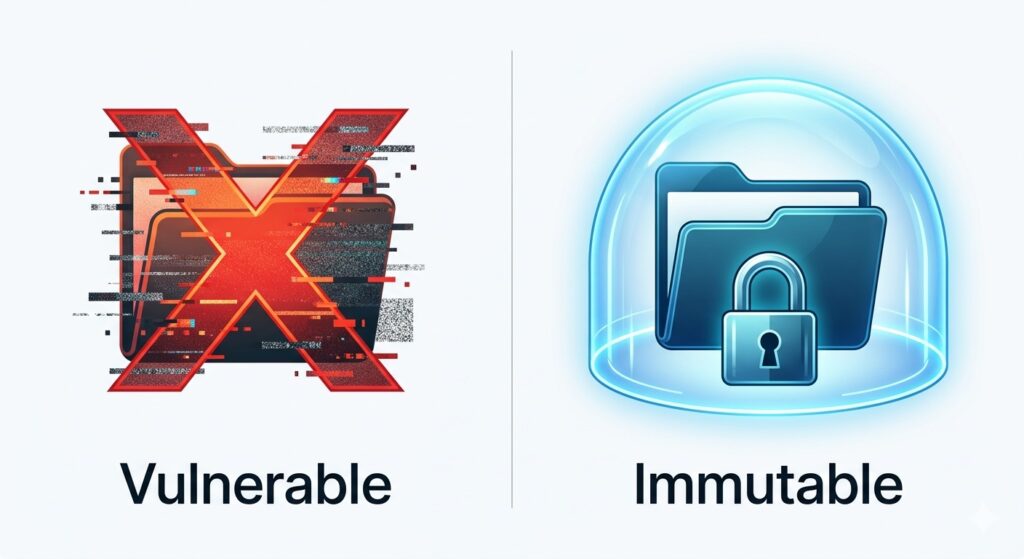
Immutability creates a “write-once” environment that ransomware cannot modify.
Immutable and air-gapped backups prevent attackers from modifying backup files.
These systems enforce write protection so backup data cannot be deleted or encrypted.
Examples include:
- immutable object storage
- WORM-enabled backup repositories
- offline or air-gapped storage environments
These protections ensure ransomware cannot destroy every backup copy.
Offsite Backup and Geographic Redundancy
Offsite backups protect healthcare data from facility-level outages.
Common scenarios include:
- power failures
- natural disasters
- infrastructure outages
- storage hardware failures
Offsite storage locations include:
- secondary data centers
- cloud backup repositories
- geographically separate storage facilities
Geographic separation ensures at least one backup copy remains available.
Backup Verification and Restore Testing
Backup verification confirms that systems can restore successfully.
Testing processes often include:
- restoring EHR databases in isolated environments
- verifying PACS imaging system recovery
- confirming database consistency
- validating application services after recovery
The “0 backup errors” requirement ensures healthcare systems can be restored during emergencies.
Example Architecture: 3-2-1-1-0 Backup for a Medical Practice
Healthcare organizations typically deploy layered backup environments to protect clinical data.
| Layer | System Role |
| Production Systems | EHR platforms, PACS imaging servers |
| Local Backup Repository | Enables rapid restoration |
| Secondary Storage Media | Protects against hardware failure |
| Offsite Backup Storage | Protects against facility outages |
| Immutable Backup Storage | Prevents ransomware modification |
| Recovery Testing Environment | Confirms recovery readiness |
Healthcare Production Systems
Typical production systems include:
- Electronic Health Records (EHR)
- PACS imaging servers
- laboratory information systems
- practice management systems
- clinical databases
Backup systems capture data changes continuously or through scheduled backup jobs.
Layered Backup Architecture
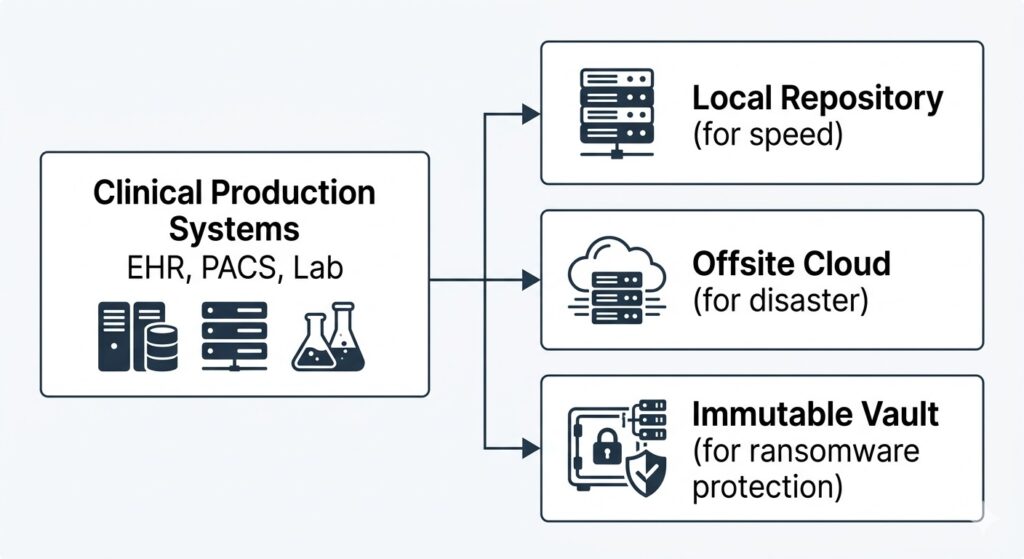
Layered architecture ensures multiple independent recovery paths for critical patient data.
A 3-2-1-1-0 backup environment typically includes:
- Local backup copy for rapid recovery
- Secondary storage media for redundancy
- Offsite backup repository for disaster protection
- Immutable backup storage to prevent ransomware modification
- Recovery testing environment to validate restore success
This architecture ensures healthcare organizations maintain multiple independent recovery paths.
How the 3-2-1-1-0 Rule Supports HIPAA Backup Requirements
Healthcare providers that store electronic protected health information (ePHI) must maintain contingency plans under the HIPAA Security Rule.
These plans ensure patient data remains available during system failures or disasters.
The 3-2-1-1-0 framework supports HIPAA requirements by ensuring that:
- retrievable backup copies exist
- backup data remains protected from modification
- recovery procedures are tested regularly
HIPAA Data Backup Plan
The HIPAA Security Rule (45 CFR §164.308(a)(7)) requires healthcare organizations to maintain a Data Backup Plan that preserves retrievable copies of ePHI.
The framework supports this requirement through redundant backup copies and secure storage environments.
| HIPAA Requirement | Backup Support |
| Maintain retrievable copies of ePHI | Multiple backup copies |
| Protect data integrity | Immutable backups |
| Ensure data availability | Offsite storage |
Disaster Recovery and Emergency Operations
HIPAA contingency planning includes:
- Disaster Recovery Plan for restoring systems
- Emergency Mode Operation Plan for maintaining patient care during outages
Reliable backup infrastructure ensures healthcare organizations can restore systems quickly and maintain clinical operations.
Common Backup Strategy Mistakes Healthcare Organizations Make
Healthcare organizations often maintain backup systems but still experience recovery failures.
-
Storing Backups in the Same Environment
Backups stored in the same environment as production systems are vulnerable to ransomware attacks. Attackers can delete or encrypt both systems through the same network.
-
Lack of Immutable Backup Storage
Backups without immutability allow attackers to modify or delete recovery points. Immutable storage prevents backup modification during defined retention periods.
-
No Recovery Testing
Organizations sometimes assume backups work because jobs complete successfully. Recovery failures often occur due to:
- corrupted backup files
- incomplete database backups
- missing application dependencies
Testing confirms that systems can restore correctly.
-
Insufficient Offsite Backup Protection
Backup copies stored in the same physical location remain vulnerable to:
- power outages
- infrastructure failures
- natural disasters
Offsite storage ensures at least one backup copy remains accessible.
Applying the 3-2-1-1-0 Framework in Healthcare Environments
Healthcare organizations apply the 3-2-1-1-0 backup rule by building backup environments that isolate data copies, protect backups from ransomware, and verify recovery readiness.
Typical infrastructure includes:
- local backup repositories
- offsite backup storage
- immutable backup protection
- automated recovery validation
Protecting Healthcare Data from Ransomware
Healthcare backup environments often include:
- immutable backup storage
- isolated backup networks
- restricted administrator access
- automated monitoring of backup jobs
These protections prevent attackers from encrypting backup repositories.
Verified Recovery for Clinical Systems
Healthcare providers confirm recovery readiness by restoring systems in controlled testing environments.
Validation processes include:
- restoring EHR databases
- verifying PACS imaging recovery
- confirming database integrity
- measuring recovery time objectives
Organizations that maintain isolated backups, immutable storage, and verified recovery processes reduce downtime during cyber incidents.
Healthcare providers often work with specialized healthcare data protection providers such as Central Data Storage to design backup environments aligned with the 3-2-1-1-0 framework. These environments combine immutable backup storage, offsite protection, and automated recovery validation to maintain reliable access to patient data.
Assess Your Healthcare Backup Readiness
Not every backup system meets the 3-2-1-1-0 resilience standard.
Healthcare organizations should evaluate whether their backup architecture includes:
- immutable backup protection
- offsite storage separation
- recovery verification testing
- ransomware-resistant backup infrastructure
CDS helps healthcare providers build backup environments designed to protect EHR systems, imaging platforms, and patient databases while maintaining reliable recovery during cyber incidents.
Schedule a healthcare backup readiness assessment to identify gaps in your current backup strategy and improve ransomware resilience.
FAQs – 3-2-1-1-0 Backup Rule for Healthcare
Where should healthcare organizations store offsite backups?
Healthcare organizations should store offsite backups in secure cloud repositories, secondary data centers, or geographically separate storage locations. Offsite storage protects backup data from facility outages, disasters, and infrastructure failures.
Why should healthcare backups be encrypted?
Healthcare backups should be encrypted to protect electronic protected health information (ePHI) from unauthorized access or data breaches. Backup encryption secures stored patient data and supports compliance with healthcare security and privacy regulations.
What is the role of RTO and RPO in healthcare backup strategies?
Recovery Time Objective (RTO) defines how quickly systems must be restored, while Recovery Point Objective (RPO) defines how much data loss is acceptable. Healthcare backup strategies use RTO and RPO to plan recovery for EHR systems, imaging servers, and clinical databases.
How does backup monitoring improve healthcare data protection?
Backup monitoring improves healthcare data protection by detecting failed backup jobs, storage errors, and replication failures in real time. Monitoring alerts allow IT teams to fix backup issues before data recovery is needed.
Last updated on March 19, 2026